Tell Us About Your Project

How Long Do Animatronic Dinosaurs Last? Maintenance & Lifespan for Park Operators
Animatronic repair is one part of a much bigger lifecycle question: how long can an animatronic dinosaur remain commercially useful? The purchase is not the end of the investment. This is the last step in a decision chain we have walked across this series: understanding cost, choosing the right environment, and planning the attraction from concept to installation. This guide closes the loop with the question every operator eventually faces: what happens after opening day?
If you are investing in animatronic dinosaurs for a theme park, the purchase price is only one part of the decision. You also need to understand how long the equipment can operate, what affects its lifespan, and what happens as components begin to age. In operator terms: how long do animatronic dinosaurs last, and what keeps them running? Lifespan is part of the investment decision, not simply a maintenance issue — and managed properly, it becomes lifecycle management, not calendar counting.
1. How Long Do Animatronic Dinosaurs Last?
Quick answer: there is no single fixed lifespan. A well-engineered animatronic dinosaur can remain in service for many years, but its useful operating life depends on how it is designed, operated, maintained, and supported. That is why animatronic dinosaur lifespan is a management outcome, not a factory specification.
A fixed number such as “ten years” can be misleading, because calendar age alone does not determine useful operating life. The honest answer is a range — and where you land inside that range is decided by the factors in the next section. That is why two identical dinosaurs in two different parks can age at completely different speeds.
2. What Determines the Lifespan of an Animatronic Dinosaur?
Operating Hours. A creature running twelve hours a day ages faster than one running six — operating hours are the first input into any honest animatronic dinosaur lifespan estimate. Total operating hours, not calendar years, is the honest clock.
Movement Cycles. Every head turn, jaw snap, and tail sweep is one cycle. Complex motion programs with high cycle counts wear motion components faster. Motion is the product — but motion is also the wear.
Indoor vs Outdoor Environment. Environment sets the aging rate: UV ages skin, moisture drives corrosion, temperature cycles stress electronics. The same machine ages differently in different environments — which is why the selection decision you made at the planning stage keeps paying you, or charging you, for years. For a deeper comparison, see our guide to [indoor vs outdoor animatronics for theme parks →].
Engineering & Component Quality. Motor sizing, reducer quality, control system design, structural treatment — decisions made in the factory decide how gracefully the machine ages.
Maintenance. Animatronic maintenance is the multiplier. The same machine with a preventive program and one without will diverge within the first two seasons.
Availability of Replacement Parts. This is the one most buyers miss. A dinosaur does not necessarily reach the end of its life when one component fails. If the component can be replaced, the attraction can often continue operating. Parts availability is lifespan.
3. How Different Components Age Over Time
An animatronic dinosaur does not age as a single component. Different systems have different wear profiles because the machine itself is built from multiple mechanical, electrical, and structural systems. Our guide to [how animatronic dinosaurs are made →] explains how these systems fit together.
| Component | What Changes Over Time |
|---|---|
| Motor | Wear, noise, reduced performance |
| Reducer | Wear, backlash, noise |
| Bearings | Friction, play, noise |
| Control box | Electronic aging, obsolescence |
| Sensors | Accuracy drift, failure |
| Silicone skin | Cracking, fading, surface aging — fastest outdoors under UV |
| Audio components | Sound quality degradation, failure |
| Structural frame | Corrosion or fatigue, depending on environment |
Read the table the way an engineer reads it: the frame usually outlives everything else, while the skin and the motion components arrive at their service point first.
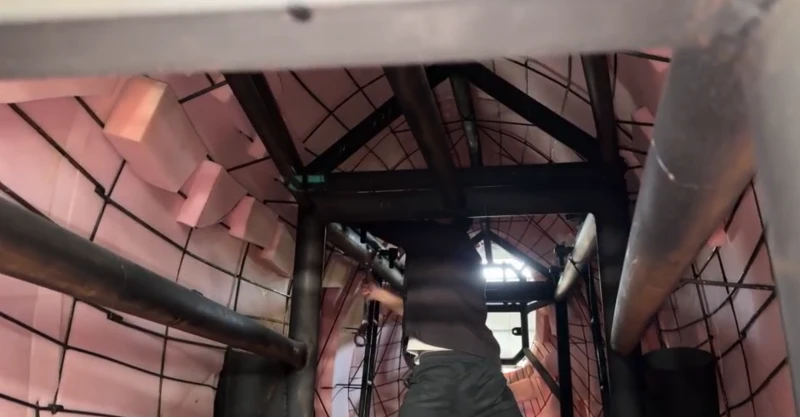
And here is the practical truth about animatronic repair: it is almost always component-level — a motor swap, a reducer replacement, a skin patch — not a whole-unit rebuild. That is exactly why the replacement-parts question matters more than the warranty question.
4. Maintenance Is What Extends Operational Life
Animatronic maintenance is not a cost center. It is the mechanism that converts purchase price into years of operating life.
Preventive Maintenance. Planned inspection and service, done before failure, keeps small wear from becoming large downtime — the core of any serious animatronic maintenance program. It is the same logic used in preventive maintenance across industrial assets: the cheapest repair is the one you scheduled.
Condition Monitoring. Your operators are the first line of condition monitoring. Train them to notice:
- Abnormal noise
- Unusual movement
- Slower response
- Loose joints
- Water intrusion
- Skin damage
For equipment with moving mechanical components, operator awareness and appropriate safeguarding are also important parts of safe operation and maintenance. OSHA’s machine-guarding guidance provides a useful reference for identifying hazards associated with moving parts and maintaining appropriate safeguards.
Many developing failures show warning signs before they result in complete downtime. Condition monitoring is essentially about recognizing those signals early.
Maintenance Records. Operating hours, repairs, replaced parts, recurring failures. Without records, you cannot distinguish “this component wears fast” from “this component is defective” — and you cannot negotiate intelligently with the manufacturer about spares.
The rhythm also scales with the machine: a compact indoor unit simply accumulates wear slower than a large outdoor installation running twelve-hour days, so its maintenance plan can stay lighter. But there is no universal calendar — maintenance frequency should be set according to operating hours, movement cycles, environment, and manufacturer recommendations. In general, operators combine routine daily checks with scheduled inspections and periodic full servicing.
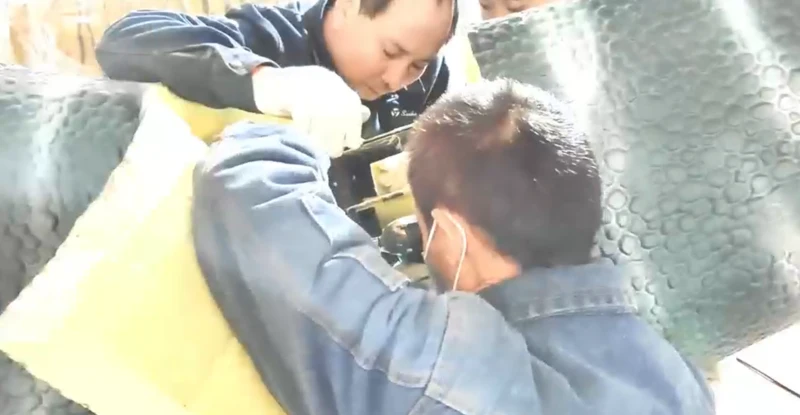
5. Warranty vs. Lifespan: They Are Not the Same Thing
An animatronic dinosaur warranty tells you how long certain components are covered. Lifespan tells you how long the attraction can remain commercially useful. Confusing the two is one of the most common operator errors.
Read properly, an animatronic dinosaur warranty is the manufacturer’s wear map. Different components carry different warranty periods because they have different functions, operating conditions, and replacement characteristics. Here is our own warranty structure at Sanhe Creature, published as a working example of how to read one:
| Component | Warranty |
|---|---|
| Motors | 2 years |
| Reducers | 2 years |
| Control boxes | 2 years |
| Video glasses | 6 months |
| Cameras | 6 months |
| Screens | 6 months |
| Water pumps | 6 months |
| Smoke machines | 6 months |
| Bearings | 6 months |
| Speakers | 3 months |
| Sensors | 3 months |
| Batteries | 3 months |
| Chargers | 3 months |
| Fans | 3 months |
| Coin acceptors | 3 months |
Read the tiers the way they are meant to be read. The two-year tier generally covers core components that are expected to have a longer service life under normal operating conditions. The shorter tiers generally cover components more exposed to wear, environmental conditions, or routine replacement — the ones worth paying attention to in your inventory plan. The short-warranty list is a strong starting point for your spare-parts planning. That is not a contradiction; that is buyer education.
Beyond the standard animatronic dinosaur warranty, we provide two years of free hardware and software updates on all custom units — the customer covers shipping only. Support does not end at commissioning.
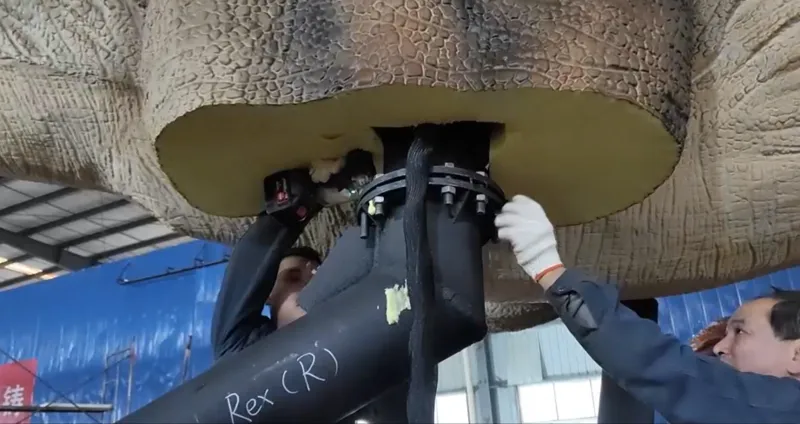
6. Lifecycle Decisions: Keep, Refurbish, or Replace?
When an animatronic dinosaur gets older, operators face three honest options.
Option 1 — Keep Operating. The structure is sound, repairs are manageable, parts remain available, and the visitor experience is still strong. Age alone is not a reason to retire a machine — operators often ask how long do animatronic dinosaurs last, and the honest answer is: as long as the structure, parts, and visitor experience hold up.
Option 2 — Repair or Refurbish. One or several components are aging, but the attraction still carries value: replace motors, replace reducers, update controls, repair skin, refresh electronics. Component-level animatronic repair is usually a fraction of whole-unit replacement cost.
Option 3 — Replace. Repair frequency becomes too high, critical parts are unavailable, structural condition deteriorates, downtime becomes commercially unacceptable, or the attraction no longer fits the park. Then replacement is the rational call.
When does refurbishment beat replacement? Before comparing refurbishment with replacement, it helps to understand the original economics of the attraction — our guide to [what a dinosaur theme park attraction really costs →] breaks down the major cost factors. Simple test: refurbishment makes sense when repair cost sits well below replacement cost, and the structure is still good, the attraction still draws visitors, spare parts are available, and the technology still meets operating requirements. When those conditions hold, replacing the whole unit is spending money to solve a problem you did not have. And when refurbishment wins, execution is its own discipline — phased deployment, modular swaps, control migration. Our guide on [what happens beyond the warranty: upgrade, refurbish, or replace →] walks through that calculation with real downtime windows and cost ranges.
7. How Park Operators Can Reduce Downtime
Downtime is where lifespan becomes revenue loss. The operators who manage it well do the same six things:
- Keep critical spare parts on site. Most animatronic repair is a component swap — and a swap without the component on the shelf is a wait. The difference between two days down and two weeks down is usually a parts shelf.
- Keep technical documentation. Wiring diagrams, BOMs, as-built drawings. Documentation turns a repair from an archaeology project into a work order.
- Train operators. The people who run the attraction daily are the first line of condition monitoring.
- Maintain manufacturer support. A reachable engineering team changes what a failure costs you — and keeps your animatronic maintenance program backed by real engineering answers.
- Track failure history. Recurring failures are data, not noise.
- Plan maintenance during low-traffic periods. Schedule the annual inspection for the quiet season, not the week before peak.
8. Common Lifespan Mistakes Park Operators Make
Mistake 1: Assuming warranty expiration means end of life. An animatronic dinosaur warranty is a coverage window, not a lifespan. A machine out of warranty with good parts support is still an asset.
Mistake 2: Waiting for complete failure before replacing worn components. Wear announces itself — noise, play, slower response. Replacing on announcement is cheaper than replacing on collapse.
Mistake 3: Treating indoor and outdoor equipment the same. An indoor-specification machine running an outdoor duty cycle is aging on a schedule you did not approve.
Mistake 4: Ignoring operating hours and movement cycles. The honest clock is cycles, not years, and those cycle logs drive your animatronic maintenance plan. Log them.
Mistake 5: Replacing an entire dinosaur when component-level animatronic repair would cost a fraction as much. The frame is usually fine. The money goes where the wear is.
Mistake 6: Buying equipment without considering long-term spare parts and technical support. This mistake is made at purchase and paid for at year three. Ask the parts question before you sign, not after you fail.
9. What to Look for in Long-Term Manufacturer Support
The question is not “what happens at delivery?” but “what happens after delivery?”
- Warranty clarity — written tiers, written exclusions
- Spare parts availability — and a written commitment on how long parts remain available
- Technical documentation — delivered with the machine, not promised later
- Remote technical support — response time in writing
- Component replacement support — parts and procedures that make animatronic repair possible for a site technician
- Refurbishment support — skin, motion, controls, when the time comes
These requirements are easiest to manage when lifecycle support is considered during the attraction planning stage, rather than after commissioning. Our [step-by-step guide to planning a dinosaur-themed attraction →] shows where those decisions belong in the project timeline.
For developers and operators planning a custom dinosaur-themed attraction, Sanhe provides animatronic dinosaurs, themed creatures, interactive attractions, and turnkey project support — from concept development through installation, commissioning, and the years of operation after.
10. The Animatronic Dinosaur Lifecycle & Operator Checklist
The lifecycle of a well-managed animatronic dinosaur looks like this:
Purchase → Installation & Commissioning → Routine Operation → Preventive Maintenance → Component Replacement → Refurbishment / Upgrade → Continued Operation → (eventually) Replacement
The goal is not to maximize the age of a dinosaur. The goal is to maximize the commercially useful animatronic dinosaur lifespan your investment delivers.
| Lifecycle Stage | Park Operator Should Check |
|---|---|
| Before purchase | Warranty tiers, parts availability, technical support |
| Installation | Commissioning records, documentation delivered |
| Operation | Operating hours and movement cycles logged |
| Maintenance | Inspection program running, preventive work scheduled |
| Aging | Component condition, repair frequency trending |
| Refurbishment | Repair cost vs replacement cost, structure condition |
| Replacement | Downtime cost, structural condition, ROI |
Conclusion
You have chosen the attraction. You have evaluated the cost. You have selected the right environment. You have planned the attraction. Now you need to make the investment last.
A successful animatronic dinosaur attraction is not measured only by its opening-day impact. It is measured by how reliably it continues to perform for visitors year after year — bringing the entire investment journey full circle. From why the attraction works, to what it costs, where it belongs, how it is built, and how it stays operational, the goal is the same: creating [experiences that keep visitors engaged →]. That is the whole chain, and you have now walked it.
Planning a dinosaur-themed attraction, or keeping one running? [Talk to our project team →] about animatronic design, manufacturing, refurbishment, and long-term support. Or explore our [theme park attraction design & execution →] capabilities.
Frequently Asked Questions
How long do animatronic dinosaurs last?
There is no single fixed number. A well-engineered animatronic dinosaur can remain in service for many years; the animatronic dinosaur lifespan you actually get depends on design, environment, operating hours, maintenance, and parts availability. Think in components, not calendar years.
What factors affect animatronic dinosaur lifespan?
Operating hours, movement cycles, indoor vs outdoor environment, engineering quality, maintenance discipline, and replacement parts availability. Two identical machines in two different parks can age at different speeds.
How often do animatronic dinosaurs need maintenance?
Animatronic maintenance frequency should be set according to operating hours, movement cycles, environment, and manufacturer recommendations. In general, operators combine routine daily checks with scheduled inspections and periodic full servicing — outdoor, high-cycle installations sit at the tighter end of every interval.
Does the warranty period determine how long an animatronic dinosaur lasts?
No. An animatronic dinosaur warranty is a coverage window; lifespan is an operating outcome. A machine out of warranty with good parts support remains a productive asset — and the warranty tiers themselves tell you which parts to stock.
Should I repair, refurbish, or replace an old animatronic dinosaur?
If the structure is sound and parts are available, component-level animatronic repair or refurbishment is usually the economic choice. Replace when repair frequency, parts unavailability, structural condition, or downtime cost makes continued operation irrational.
How can park operators reduce animatronic dinosaur downtime?
Stock critical spares, keep documentation, train operators as condition monitors, maintain manufacturer support, track failure history, and schedule heavy maintenance in low-traffic periods.