Tell Us About Your Project


Why Animatronics Are Perfect for Seasonal Events: Halloween, Christmas and Beyond
When most people think of holiday entertainment, the first things that come to mind are live performers, cover bands, magicians, or maybe a DJ. And for a corporate holiday party or a wedding reception, those choices make perfect sense.
But for large-scale seasonal events—Halloween festivals, Christmas markets, winter light celebrations, community parades—the entertainment challenge is fundamentally different. You aren’t filling a ballroom for 200 guests. You are trying to engage thousands of visitors across a sprawling outdoor venue, often over a window of just a few weeks.
That changes the math entirely.
Event organizers working at this scale need attractions that can operate extended daily hours, withstand unpredictable weather, pull crowds from across a festival ground, and generate the kind of social media moments that keep the event visible beyond the venue. Live performers can do some of this. So can projection mapping, lighting installations, and large-scale sculptures. Each format has its strengths in providing top-tier holiday entertainment.
Among these options, animatronics occupy a particularly interesting position. They combine the visual spectacle of a large-scale installation with the kinetic energy of a live performance—and unlike either, they can be reused across multiple seasonal events with relatively modest modifications.
This article explores why animatronics have become a go-to attraction format for seasonal events, where they work best, and what organizers should consider before integrating them into an event plan.
The Difference Between Decoration and Entertainment
To understand why animatronics work at scale, it helps to draw a clear line between two things that often get conflated: seasonal decorations and seasonal entertainment.
Decorations set the scene
A 20-foot inflatable Santa, a field of carved jack-o’-lanterns, or a massive fiberglass dragon at the entrance of a festival—these are decorations. They establish atmosphere, create visual landmarks, and signal to visitors that they’ve arrived somewhere special. They are necessary, and they do their job well.
But decorations are fundamentally passive. Visitors see them, maybe snap a photo, and keep moving.
Entertainment creates a reason to stop
Entertainment, by contrast, interrupts the walking pace. It gives visitors a reason to pause, gather, watch, interact, and share. A roaming magician does this. A live band does this. And a massive animatronic creature that breathes, turns its head, and locks eyes with a passing child does this in a way that is hard to replicate with static props.

The most successful seasonal events layer both. Decorations build the world. Entertainment brings it to life. The question for organizers is which entertainment formats deliver the best combination of impact, reliability, and long-term value for their specific situation.
Why Animatronics Work as a Seasonal Event Attraction
For large-scale seasonal events, animatronics offer five practical advantages.
1. They create visual gravity at scale
A high-quality animatronic combines size, movement, and synchronized sound in a way that pulls attention from a significant distance. In a crowded festival environment where dozens of attractions compete for eyeballs, that visual gravity matters. It acts as an anchor point that shapes how visitors navigate the entire venue.
2. Movement adds a layer of engagement that static props cannot
A static fiberglass wolf is a sculpture. A wolf that breathes, tracks visitors with its eyes, and lets out a low growl when someone steps too close is an encounter. These micro-movements—chest breathing, subtle head turns, synchronized jaw articulation—create an active layer of attention that static installations, no matter how beautifully crafted, simply don’t produce.
3. They generate organic social media content
Large, moving animatronics are inherently photogenic and video-friendly. Visitors don’t just take a picture next to them—they film the movement, capture the sound, and post the interaction. For event organizers, this means every visitor becomes a potential marketing channel, generating organic exposure that paid advertising struggles to match.
4. They can be customized to fit any narrative
Off-the-shelf decorations lock you into whatever a manufacturer decided to produce. Professional animatronics can be engineered to match your exact creative brief: the size, the color palette, the movement sequences, the audio design, and the lighting integration are all configurable. This matters for seasonal events that need to differentiate themselves in a crowded seasonal market.
5. They function as reusable attraction assets
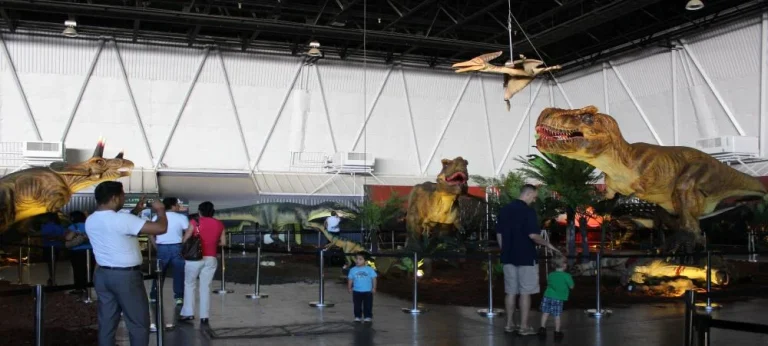
This is the point that tends to get the most attention from B2B buyers, and for good reason. A well-built animatronic is not a single-season prop. It is a reusable attraction asset that can be redeployed across multiple campaigns with relatively minor modifications—a terrifying creature for a Halloween haunt in October, a whimsical winter character for a Christmas market in December, and a prehistoric marvel for a spring dinosaur expo in April. This reusability fundamentally changes the financial logic of the investment.
Halloween Animatronics: Controlled Fear at Scale
Halloween is the most obvious seasonal fit for animatronics, and the one where the format’s strengths are most visible. Halloween entertainment is built around surprise, suspense, and controlled fear—three elements that movement, sound, and realistic textures can reinforce effectively.

Why the format fits
Animatronics can be positioned in dark environments and triggered by motion sensors, creating repeatable encounters without relying on continuous performer availability. The combination of sudden movement, localized audio, and lifelike skin textures produces a scare factor that holds up even after repeated exposure.
Where they work best
- Ticketed haunted walkthroughs: As high-impact focal points at key scare zones.
- Halloween festivals and night markets: As large-scale visual centerpieces visible from across the venue.
- Theme park seasonal overlays: As immersive attractions that drive repeat visits during the Halloween window.
- Shopping centers and public plazas: As family-friendly installations that use movement and sound without crossing into extreme horror territory.
The key distinction for organizers is scale. Professional halloween animatronics designed for commercial venues are engineered for the durability, weather resistance, and operating demands of commercial venues—a very different category from the motion-sensor props available at retail stores.
For a deeper dive into specific animatronic setups for haunted attractions, explore our professional haunted house animatronics, such as our 1.8m Animatronic Halloween Witch. Whether you are looking for a ready-made centerpiece or need to build a fully custom prop tailored to your exact creative vision, we can bring your specific concept to life.
Christmas Animatronics: Wonder, Not Fear
The emotional register of Christmas events is entirely different from Halloween, and this is where animatronics prove their versatility. Christmas entertainment is not about surprise or fear. It is about wonder, warmth, family connection, and a sense of shared celebration.
Why the format fits
Winter festivals and Christmas markets rely on creating a “magical” atmosphere that feels premium and memorable. Large-scale christmas animatronics—a breathing, singing winter creature, a highly detailed moving Santa installation, or a family of animatronic reindeer that interact with each other—serve as emotional anchors that make an event feel like a destination rather than a pop-up.

Where they work best
- Christmas markets and winter festivals: As the central gathering point or stage backdrop.
- Shopping malls and commercial venues: To increase dwell time and create a destination for family photos.
- City celebrations and parades: As the centerpiece of a holiday float or a stationary display in a civic square.
- Theme parks and botanical gardens: As immersive installations that extend the holiday season into January.
Unlike the jump-scares of Halloween, christmas animatronics focus on gentle, mesmerizing movements and warm audio design. The goal is to create safe, highly shareable moments for families—proof that the same underlying mechanical platform can serve radically different emotional purposes depending on the creative treatment of your christmas animatronics.
Beyond Halloween and Christmas: Adaptability Across the Calendar
One of the most underappreciated advantages of animatronics is their adaptability across seasonal formats. For some custom animatronic designs, the underlying mechanical and control systems can be reused while the visual treatment, audio, lighting, and narrative are adapted for different seasons.
This means a single animatronic asset can serve multiple roles across the year:
- Spring and Easter events: Custom fauna, fantasy creatures, or oversized floral characters.
- Summer carnivals and cultural festivals: Large-scale mascots or mythical beasts that fit local folklore.
- Winter light festivals: Glowing, kinetic sculptures synchronized with projection mapping.
- Civic celebrations and parades: Branded characters for town anniversaries, national holidays, or community milestones.
The practical implication for event operators is significant. Rather than treating each season as a fresh procurement cycle, organizers can build a library of reusable attraction assets that are reskinned and reprogrammed as needed. This shifts the budget conversation from “What do we need to buy for this event?” to “How do we deploy what we already own?”—a much more sustainable approach to festival entertainment planning. In fact, versatile festival entertainment strategies rely on this exact kind of multi-season asset utilization.
How Animatronics Compare With Other Entertainment Formats
It is worth being straightforward: animatronics are not a replacement for every form of holiday entertainment. They are one format among many, and the right choice depends on the event’s goals, budget, and operating conditions for large seasonal events.
Here is how they stack up against other common options:
| Entertainment Format | Visual Impact | Visitor Interaction | Scalability | Reusability |
|---|---|---|---|---|
| Live Performers / Actors | High | Very High | Medium (limited by stage and schedule) | Requires recurring staffing |
| Music / Stage Shows | Medium | Medium | High | Content fatigue over repeated use |
| Static Decorations | High | Low | High | High (store and redeploy) |
| Projection / Light Shows | Very High | Low–Medium | High | Moderate (hardware reusable, content needs refresh) |
| Animatronic Attractions | Very High | Medium–High (depending on configuration) | High | High (reskin and reprogram across seasons) |
The key takeaway is not that animatronics “beat” other formats. It is that they fill a specific gap: they can combine the visual impact of a large-scale installation with a level of movement and engagement that static attractions cannot provide, while remaining reusable across multiple event cycles. For events that need a strong, consistent centerpiece that can operate reliably over extended seasonal windows, that combination is hard to match.
Once properly installed and maintained, animatronic attractions can provide repeatable operation with low ongoing staffing requirements—a meaningful advantage for events operating on tight seasonal margins.
What Event Organizers Should Consider Before Choosing Animatronics
This is where the idea of animatronics meets the reality of running an event. If you are evaluating animatronics for an upcoming seasonal event, these are the factors that will determine whether the format is a good fit for your specific situation.
- Event scale and visitor volume: 50,000 daily visitors at a festival is a completely different situation than a small corporate gathering. Scale determines how big the unit needs to be, how fast it moves, and how durable it has to be.
- Indoor vs. outdoor environment: Outdoor setups need proper IP ratings for water and dust, UV-stable materials so they don’t fade, and structural engineering to handle wind.
- Weather and temperature range: Can it work in freezing cold? Are the joints sealed against heavy rain? What about sustained heat?
- Movement and interaction requirements: Simple looping motions are straightforward and reliable. Sensor-based interactions add engagement but also add complexity and maintenance.
- Installation and crowd safety: Heavy units need secure anchoring. Moving parts need shielding to keep the public safe, especially kids.
- Transportation, setup, and storage: How does it break down for shipping? What power does it need on-site? Where does it go during the off-season?
- Customization and thematic integration: Can the audio, lighting, and visuals be modified for next year’s theme? This is where the reusability argument either works or doesn’t.
These aren’t reasons to avoid animatronics. They are simply operational variables. As noted in IAAPA’s breakdown of large-scale seasonal event execution, managing these logistical details—from crowd flow to weather contingencies—is what separates a successful festival from a chaotic one. The clearer you define these parameters upfront, the smoother the procurement and installation process will be. For more on our custom capabilities, check out our custom animatronic solutions.
Animatronics as a Reusable Event Investment
The financial argument for animatronics isn’t that they are cheaper than other entertainment. Often, a professional-grade animatronic costs more upfront than hiring live performers for a weekend.
The argument is that they are assets, not expenses.
When you invest in a custom animatronic, you are building a reusable attraction that can be deployed across multiple seasonal events:
- Year 1, October: Main scare attraction for a Halloween haunt.
- Year 1, December: Adapted for a Christmas market, where it makes sense.
- Year 2, April: Reprogrammed for a spring dinosaur exhibition.
- Year 3 and beyond: Rotated across seasonal events with maintenance and updates as needed.
When you calculate cost per use over multiple seasons of properly maintained operation, the math changes. The animatronic stops being a one-time event expense and becomes a long-term asset that delivers value year after year.
This is the distinction that separates animatronics from most other forms of holiday entertainment. A live band performs and goes home. A fireworks display burns and disappears. An animatronic goes back into storage and comes out again next season.
How to Plan an Animatronic Attraction for a Seasonal Event
If you are considering integrating an animatronic into an upcoming event, here is a practical planning framework:
- Define the experience goal. What emotion should the attraction evoke? Fear, wonder, nostalgia, curiosity? This determines everything downstream.
- Identify the interaction model. Should visitors watch from a distance, walk past, pose for photos, or physically engage? The interaction model drives the mechanical design.
- Select the format and scale. Size, movement complexity, sound requirements, and sensor integration all need to match the venue and the expected crowd density.
- Plan placement within the crowd flow. The most effective animatronics are positioned at visual termini, photo-op zones, or natural bottlenecks—not in empty corners where foot traffic is thin.
- Address the environment. Finalize power requirements, weatherproofing, anchoring, and safety barriers before the unit ships.
- Design for reuse from day one. Before finalizing the creative treatment, discuss with your manufacturer how the unit can be reskinned, reprogrammed, or structurally modified for future seasonal themes. This is where the long-term ROI lives.
Conclusion
Seasonal events are temporary by definition. The decorations come down, the lights go off, and the venue returns to its everyday function. But the experience visitors take away from those few weeks determines whether they return next year—and whether they tell their friends.
For seasonal event organizers, the challenge is finding holiday entertainment formats that deliver maximum impact within a compressed timeline, operate reliably under real-world conditions, and justify their cost over more than a single season. Animatronics offer a compelling answer to that challenge: they provide the visual spectacle of a large-scale installation, the engagement of a live performance, and the reusability of a capital asset.
They are not the right choice for every event. But for operators running large-scale seasonal events—Halloween festivals, Christmas markets, cultural celebrations, and beyond—they represent one of the most versatile and durable festival entertainment investments available.
🌍 Explore Our Full Earth Celebrations Framework
This article demonstrates just one application of our Earth Experience Systems. From parade headliners and interactive stars to festival themes, discover how our framework can transform your venue into a year-round celebration destination.
View Earth Celebrations Solutions →Need a custom animatronic attraction for a Halloween festival, Christmas market, winter event, or other seasonal attraction?