Tell Us About Your Project


Halloween Animatronics: 5 Ideas for Commercial Attractions
When most people hear “Halloween animatronics,” they picture a plastic skeleton jumping out from a bush. But in the commercial world, the requirements are entirely different.
We aren’t talking about seasonal decor. For theme parks, seasonal event organizers, and commercial venues, the goal is to build a commercially viable visitor experience. The question isn’t just “Which monster should we buy?” It’s “How does this creature actually fit into the visitor journey and daily operations?”
Let’s look at five practical ways to integrate these elements into a commercial haunted attraction, and how to make sure they actually work on opening night.
What Makes Halloween Animatronics Effective for Commercial Attractions?
Before diving into specific ideas, it helps to understand why operators invest in high-quality animatronic Halloween props instead of standard static decorations. According to industry insights from the International Association of Amusement Parks and Attractions (IAAPA), memorable and immersive visitor experiences are an important part of creating engaging attractions and encouraging repeat visits.
They Demand Attention
Static props get ignored in a busy environment. A well-engineered animatronic draws the eye, builds anticipation, and triggers a real reaction. The real value is that it gives visitors a reason to stop, take photos, and engage, turning a simple walk-through into a memorable experience.
They Anchor the Story
A good animatronic isn’t just a standalone monster; it’s a character. Combine movement, sound, and lighting, and you stop building a “display” and start building a narrative. That level of immersion makes the attraction feel substantial and gives operators real opportunities to differentiate their visitor experience.
They Are Built for the Venue
Unlike home decorations, commercial animatronics have to handle repeated operation, long operating hours, and demanding indoor or outdoor conditions. They must be designed with maintenance access, safety clearances, and crowd flow in mind from day one.
5 Halloween Animatronics Ideas for Commercial Attractions
Here are five practical concepts for integrating these creatures into real-world commercial settings.
1. Entrance Scare Animatronics
The entrance sets the tone. Before visitors even hit the queue, they need to know exactly what kind of world they are stepping into.
An entrance animatronic acts as a visual landmark. It could be a giant gargoyle, a towering skeleton, or a custom creature peering over the gate. Scale and visibility are everything here. It should communicate the theme immediately and serve as a prime photo spot. Choose a creature that represents the core identity of your attraction.
2. Interactive Jump-Scare Zones
This is where the energy peaks. A jump-scare zone isn’t just a prop; it’s a small, highly engineered experience system.
The concept is simple, but the execution has to be tight: Visitor Path → Trigger Point → Movement → Sound/Lighting → Reaction → Reset.

When designing these zones, sightlines are everything. The creature needs to be positioned to maximize the surprise. The activation method—whether based on programmed sequences, staff control, or project-specific triggering systems—must be reliable. Just as critical is the “reset time.” If a creature takes too long to reset after a scare, you will create bottlenecks during peak hours. A good jump-scare zone balances high impact with fast operational recovery.
3. Story-Driven Haunted Scenes
This is where you transition from isolated scares to full immersion. Think abandoned laboratory, cursed forest, or forgotten graveyard.
In a story-driven scene, the animatronic is just one piece of the puzzle. You need to integrate:
- Creature: The focal point (e.g., a mad scientist, a zombie, or a prehistoric creature).
- Environment: Props, ruins, foliage, and textures.
- Lighting: Shadows, strobes, and directional spots to control visibility, create contrast, and highlight the creature.
- Sound: Ambient noise and localized effects.
- Visitor Route: How guests enter, where they pause, and how they exit.
A creature becomes far more effective when it belongs to a larger, cohesive story.
4. Giant Creature Animatronics as Visual Landmarks
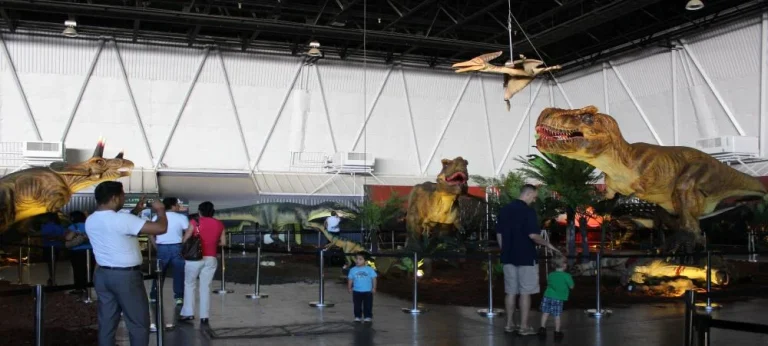
Sometimes, a project just needs a massive centerpiece. A 10-meter creature, giant spider, or towering monster can define an entire attraction.
But bigger isn’t automatically better. Before ordering a giant animatronic, you have to evaluate your venue’s physical constraints:
- Venue size and ceiling height: Does it fit without looking cramped?
- Sightlines: Can visitors see it from a distance to draw them in?
- Visitor circulation: Will it block the main pathway?
- Transportation and installation: Can it fit through your loading dock? Will specialized lifting equipment be required for installation?
The true value of a giant animatronic is not just its size, but its ability to serve as a visual anchor that reinforces the identity of the attraction.

5. Outdoor Halloween Animatronic Zones
Outdoor setups offer great scale and flexibility, but they come with additional operational requirements. Rain, humidity, UV exposure, wind, and temperature fluctuations can degrade standard props quickly.
Outdoor Halloween animatronics must be engineered specifically for the environment. This goes beyond basic weather resistance. You need to consider:
- Sealed motors and protected control boxes.
- Proper cable management and drainage to prevent water pooling.
- Structural and wind-load requirements for tall installations, where applicable.
- Easy access panels for daily maintenance in muddy or wet conditions.
For a deeper technical dive, you can read our guide on Weatherproof Animatronic Dinosaurs, which applies directly to outdoor Halloween builds.

How to Combine Halloween Animatronics Into a Complete Visitor Experience
A successful haunted attraction doesn’t just throw random monsters into a dark room. It maps out a complete journey. Here is a typical flow:
- Entrance Landmark: Sets the theme and draws the crowd.
- Queue Atmosphere: Builds anticipation with subtle sounds and small props.
- Interactive Scare Zone: High-energy engagement to spike adrenaline.
- Story-Driven Scene: Deep immersion to slow down the pace and build atmosphere.
- Major Creature Encounter: The climax of the experience.
- Photo/Exit Moment: A safe, well-lit area for final photos and merchandise.
You don’t need to fill every square meter with expensive animatronics. Different zones serve different purposes. If you are still at the early stages of designing your venue, it is crucial to map out your layout and crowd flow before selecting individual creatures. (Learn more about event layout, crowd flow, and safety planning in our guide to planning a temporary dinosaur-themed event, which applies to any temporary attraction.).
What to Consider Before Buying or Customizing Halloween Animatronics
Getting from a cool concept to a physical installation takes more than just picking a monster. When sourcing Halloween animatronics, you must look at the operational reality of your venue.
Venue and Operating Conditions
Are you running a temporary indoor setup, a permanent outdoor installation, or a seasonal mall activation? The environment affects almost every part of the installation. It changes the materials you need, how you protect the electronics, and the structural support required to keep everything safe.
Visitor Volume and Operating Schedule
Think about your daily foot traffic and peak hours. If you are running a high-volume attraction with back-to-back crowds, you will need heavy-duty mechanisms, fast reset times, and control systems built for sustained use.
Installation and Transportation
Measure your doors and loading bays before you order. A massive creature is completely useless if it gets stuck in the hallway. You also need to factor in assembly time, whether you need a crane or forklift, and the logistics of getting it in and out smoothly.
Movement, Power, and Control Requirements
Map out your power drops early in the planning phase. Animatronics need stable voltage, and complex scenes often require synchronized lighting and sound controllers. Double-check that your venue’s electrical infrastructure can actually handle the total load without tripping breakers.
Safety and Maintenance Access
Keep visitors at a safe distance from moving parts using physical barriers where needed. Equally important, make sure your technical team has easy, unobstructed access to motors and control boxes for daily checks and quick repairs.
Storage and Reuse After Halloween
Think of your animatronics as long-term assets, not single-use decorations. Plan ahead for proper off-season storage, potential refurbishment, and how you might repurpose the pieces for next year’s theme or a completely different seasonal event.
Common Mistakes When Planning Halloween Attractions
We see the same planning mistakes happen over and over in commercial Halloween attractions, especially when integrating large-scale props. Here is what you want to avoid:
Buying Individual Props Without a Theme
Purchasing random, cool-looking creatures without a unifying story usually results in a disjointed, confusing experience. It is always better to stick to a core theme.
Using Large Animatronics Without Planning Visitor Flow
Dropping a massive, slow-moving creature into a narrow corridor is a recipe for bottlenecks and blocked sightlines. Design your visitor flow first, then place the props accordingly.
Ignoring Outdoor Operating Conditions
Assuming a standard indoor prop will survive a rainy October night is a costly mistake. Always verify the specific weatherproofing and ground conditions required for your outdoor builds.
Designing the Visual Effect but Not the Operation
If a prop looks impressive but takes forever to reset, requires a ladder for routine maintenance, or has messy cable management, it will become a major operational headache during peak hours. You have to design for the operator, not just the visitor.
Planning for Halloween Night but Not Installation and Storage
Forgetting to account for the teardown process, packing dimensions, and off-season storage can quickly turn a well-planned event into a logistical nightmare.
From Halloween Animatronics to a Complete Seasonal Attraction
Effective Halloween event planning always treats these animatronic Halloween elements as one piece of a larger attraction system. A solid workflow usually looks like this:
Concept → Layout → Story → Animatronics → Environment → Installation → Operation
For commercial Halloween projects, it is best to involve a capable manufacturing partner before you even select individual animatronics. The project will likely require custom creatures, themed environments, transportation planning, installation support, and maintenance considerations right from the start.
As a direct source factory, Sanhe Creature provides the custom animatronics, themed environments, and engineering backing needed to bring these complex commercial ideas to life.
Conclusion
The best Halloween animatronics do more than just decorate a venue. They give visitors a reason to stop, react, and remember the experience. By focusing on operational reality, smart visitor flow, and cohesive storytelling, you can build a commercial attraction that actually stands out in a crowded market.
Ready to build your next haunted attraction?
If you are planning a commercial haunted attraction, start with the overall project requirements rather than just picking a single prop. Share your venue details, operating environment, approximate scale, and creative direction with our team, and we can help assess the feasibility of your project.