Tell Us About Your Project

Small Animatronic Dinosaur Buying Guide (2026): Size, Cost, Placement & ROI
Table of Contents
What Is a Small Animatronic Dinosaur?
It’s not really “decoration” in the way people think. A small animatronic dinosaur is a compact, commercially engineered motion figure built for indoor and semi-indoor environments like malls, museums, restaurants, and themed attractions.
Unlike large outdoor installations that need concrete foundations and heavy power drops, this category is designed for quick deployment. Most models stay under 2 meters. That’s not arbitrary—it’s a practical threshold. They fit through standard doors, run on regular 120V outlets, and don’t require cranes.
We’ve seen this shift firsthand. Operators aren’t just buying dinosaurs anymore. They’re buying predictable attention control. A properly placed unit changes how visitors pause, move, and engage. That’s why adoption has grown across retail and entertainment. The goal isn’t spectacle. It’s spatial behavior optimization.
Market Demand: Why Compact Installations Are Increasing
Demand has grown for a simple reason: dead spaces are expensive. Compact animatronics fix that without structural renovation. When buyers look for an animatronic dinosaur for sale, they’re usually solving a traffic-flow problem, not just filling a visual gap.
Shopping Malls
We’ve tracked this across multiple projects. Dead corridors don’t need more signage. They need a reason to slow down. A motion-based anchor changes foot traffic patterns overnight.
Museums & Education Centers
Institutions use compact units to bridge static dioramas and interactive learning. Motion gets added without disrupting curatorial sightlines.
Family Entertainment Centers (FECs)
FECs run on dwell time. Even a small installation stretches average visit duration, which directly lifts secondary spending.
Restaurants & Themed Dining
Here, it’s about perceived wait time. A 1.2–1.5m unit near the entrance or patio doesn’t just look good—it makes waiting feel shorter.
Size Planning Framework
Size isn’t really about looks. It’s about how people move around it. A poorly sized small animatronic dinosaur will drag down engagement, even if the model itself is high quality.
| Venue Type | Ideal Height | Footprint | Operational Logic |
|---|---|---|---|
| Mall corridor | 1.5–1.8m | 0.8 × 1.2m | Controls walking speed |
| Restaurant | 1.2–1.5m | 0.6 × 1.0m | Enhances waiting perception |
| Museum | 1.6–1.9m | 0.9 × 1.3m | Supports educational focus |
| Retail walkway | 1.5–1.8m | 0.8 × 1.2m | Increases visual dwell time |
Clearance Engineering Rule (Critical)
A standard rule we use on site walks: Clearance = 40% of total height around the unit
For a 1.6m unit, that’s roughly 0.6m of buffer space.
This prevents crowd compression, stops guests from leaning on moving joints, and leaves room for maintenance. Most operational failures in compact animatronics aren’t mechanical. They’re placement-related. We usually catch this before the crate even arrives.
Real Cost Structure & Animatronic Dinosaur Cost Breakdown
The sticker price is only part of the equation. Freight, power prep, and first-year upkeep usually make up the rest. Understanding the full animatronic dinosaur cost means looking past the base quote.
| Category | Range | Notes |
|---|---|---|
| Base Unit | $1,800–$5,500 | Depends on motion system complexity |
| Shipping | 15–25% | Based on crate size and route |
| Installation | $0–$300 | Usually low labor requirement |
| Maintenance | ~$120/year | Lubrication + inspection |
Hidden Costs Most Buyers Miss
These rarely show up in the initial small animatronic dinosaur price list. We usually see them pop up during shipping coordination or on-site electrical checks:
- Customs clearance delays (international routes)
- Dedicated circuit installation
- Protective flooring or anchoring upgrades
- Seasonal relocation labor
Budgeting for these upfront keeps deployments on track.
ROI Model for Deployments
ROI depends less on the unit itself and more on where you put it. In practice, a properly positioned small animatronic dinosaur shifts three measurable behaviors:
1. Dwell Time Increase
Visitors naturally slow down or pause in activation zones.
2. Photo Capture Rate
Motion triggers significantly higher mobile photography.
3. Secondary Spending Lift
Adjacent F&B or retail zones often see indirect revenue bumps.
Payback periods vary, but in most mid-size malls or FECs, they usually land somewhere between 3 and 5 months. That assumes foot traffic is stable and the unit isn’t hidden behind a pillar or out of the main sightline. After that window, it operates as a low-cost engagement asset.
Why Operators Start With a Small Animatronic Dinosaur
Most commercial buyers don’t jump straight into large installations. There’s a practical rhythm to it:
Lower financial risk first. Compact units usually stay within operating expense limits, bypassing capital approval committees. Then real data collection. You can’t predict how people will interact with a static layout until the unit is actually on the floor. Finally, flexible deployment. Once engagement metrics are clear, adding a second or third unit becomes straightforward.
It’s a test-before-invest model. And it cuts long-term guesswork.
Recommended Models by Venue Type
| Model | Height | Best Use Case | Key Advantage |
|---|---|---|---|
| Baby T-Rex | 1.2m | Dining spaces | High visual friendliness |
| Velociraptor | 1.6m | Malls | Strong motion trigger |
| Parasaurolophus | 1.7m | Museums | Audio + visual synergy |
| Triceratops | 1.5m | Kids zones | Safety-focused structure |
| Custom Unit | 1.2–1.9m | Branding | Fully adaptable design |
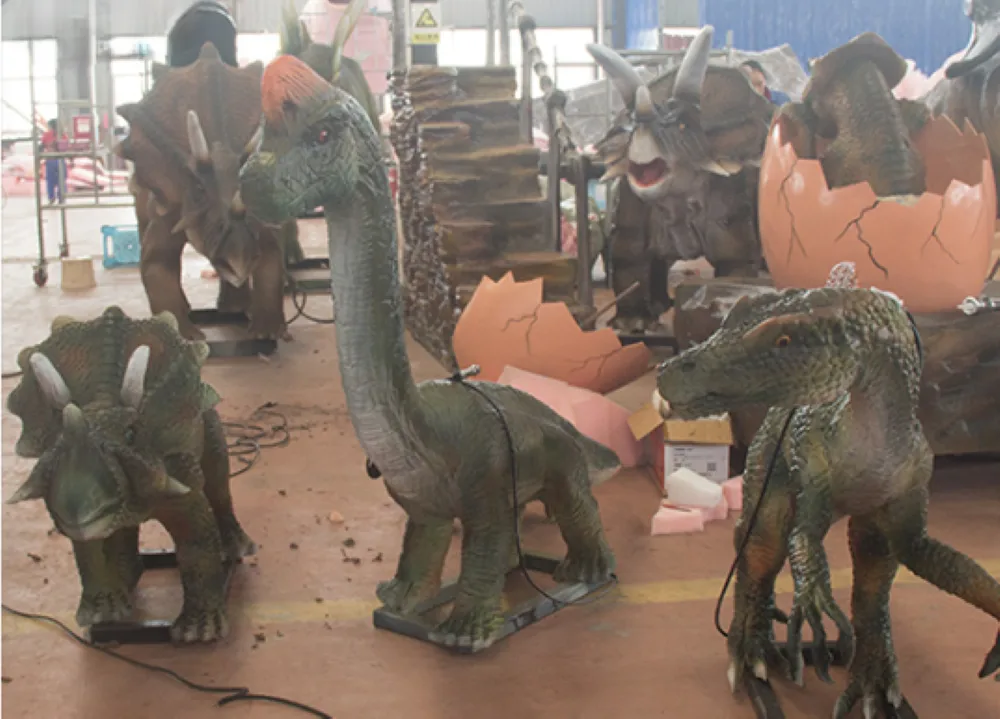
When evaluating an animatronic dinosaur for sale, we usually match configuration to foot traffic rather than just initial visual preference. Motion speed, sound profiles, and skin finishes are fully adjustable.
👉 [View Full Animatronic Dinosaur Collection →]
Case Study: Family Entertainment Center (USA Midwest)
Initial Problem
A 1,200 sqm entertainment center had a 12 sqm corridor near the food court. Visitors walked straight through. Static displays didn’t change the pattern.
Deployment Decision
They chose a 1.6m Velociraptor instead of a large flagship. Why? Ceiling height capped at 2.6m, budget constraints, and a need for fast deployment testing.
Installation Process
- Delivered via standard LTL freight
- Anchored to polished concrete in under 90 minutes
- Connected to an existing 120V outlet
- PIR trigger configured with a 3-second cooldown
Results After 90 Days
- +22% dwell time in the corridor
- ~340 monthly social media tags
- +14% sales lift at the adjacent snack kiosk
- Zero unscheduled maintenance calls
Operator Insight
The operator’s takeaway wasn’t about the dinosaur looking cool. It was about predictable foot traffic redirection. That’s usually the real metric that matters.
Application Scenarios
Shopping malls use them to activate low-traffic corridors. Museums pair them with static exhibits to add movement without disrupting layouts. Restaurants place them near waiting areas—not for spectacle, but to make wait times feel shorter. FECs rotate them between zones to keep the floor plan fresh. Trade shows treat them as portable attention anchors in crowded convention halls.
The use case changes, but the deployment logic stays the same: match size and motion to the existing traffic flow.
Motion Design Strategy
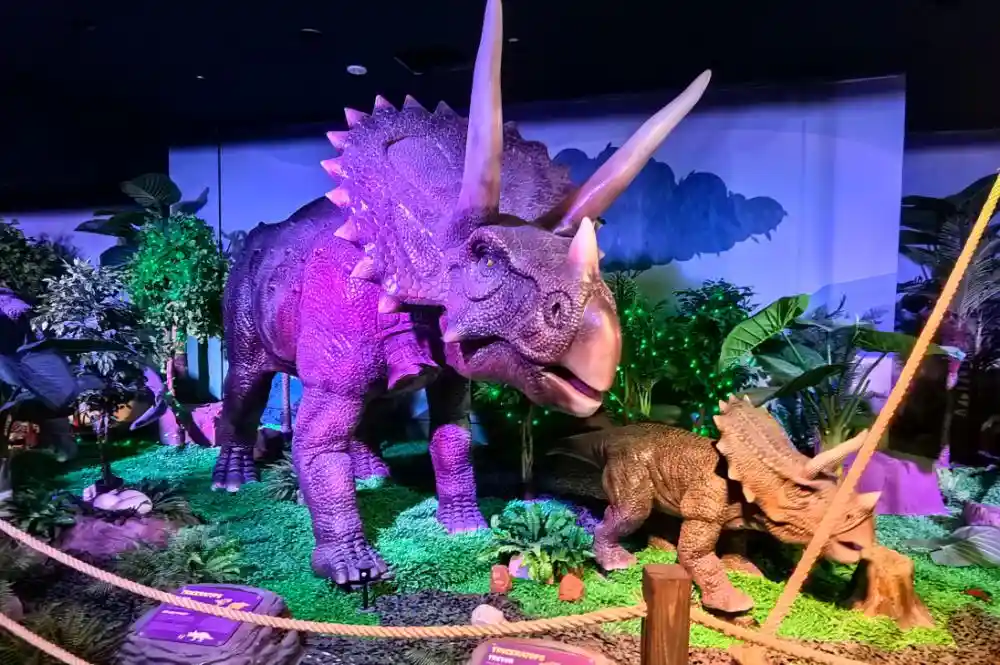
Motion usually matters more than species. A T-Rex with stiff, looped movement will underperform a compact raptor that actually reacts to foot traffic.
Photo Attraction Mode
Fast, reactive cycles. Built for high-traffic entrances.
Ambient Mode
Slow, looping movement. Designed for background presence without overwhelming the space.
Interactive Kids Mode
Restricted range, sealed joints, safety-first engineering.
A small animatronic dinosaur performs differently depending on motion configuration, not just appearance. We configure based on what you want visitors to do, not just what looks impressive on paper.
Placement Engineering Rules
Power
One 120V / 15A outlet within 3 meters. Keep it off shared circuits with coffee machines or compressors. Voltage drops are the fastest way to reset a control board.
Sightlines
Optimal engagement range: 1.2–4 meters. If the head and torso aren’t visible from standing height, visual impact drops.
Safety Clearance
Minimum 0.8m from pedestrian pathways. Never block primary egress routes. Always align placement with official ADA Accessibility Guidelines to avoid compliance fines during venue inspections.
Environmental Control
Avoid direct HVAC airflow and prolonged sun exposure. Both accelerate wear.
Maintenance Lifecycle
| Interval | Task |
|---|---|
| Weekly | Cleaning and inspection |
| Quarterly | Lubrication and bolt check |
| Yearly | Full system diagnostics |
Most issues come from skipped lubrication or dust in sensor gaps. Not system failure. A 20-minute quarterly check usually prevents 90% of field calls.
Engineering & Compliance Standards
- CE / UL electrical certification
- ASTM fire rating compliance per ASTM E84 standard
- RoHS material safety standards
- IP44+ environmental protection
- Emergency stop system integration
These aren’t optional add-ons. They’re the baseline for venue approval and insurance coverage.
Common Buyer Mistakes
We’ve audited enough site visits to know where projects go wrong.
1. Ignoring Clearance Before Purchase
Leads to blocked pathways or disabled installations.
2. Choosing Appearance Over Motion
Reduces actual engagement. How it moves matters more than what it is.
3. Underestimating Freight Cost
Oversized crates can increase total budget by 60–80%.
4. No Spare Parts Strategy
Leads to extended downtime when a sensor or joint fails. Always confirm parts availability before signing.
How to Choose the Right Compact Unit
Before finalizing a purchase, run through this quick filter:
Define the goal – Traffic redirection, education, or pure entertainment.
Measure the actual space – Include doorways, ceiling height, and ADA lines.
Match motion type to behavior – Fast trigger for high traffic, slow loops for atmosphere.
Verify power supply – Avoid shared circuits with heavy loads.
Confirm maintenance support – Ensure spare parts are available domestically for Year 2+.
That’s usually enough to narrow it down to two or three viable options. From there, it’s just lead times and finish choices.
Frequently Asked Questions
What is the typical small animatronic dinosaur price?
Base units range $1,800–$5,500. The final animatronic dinosaur cost depends on motion complexity, shipping route, and installation requirements. Most Year 1 deployments—including freight, setup, and maintenance—stay between $2,200–$6,500.
Where can I find a reliable animatronic dinosaur for sale?
Focus on suppliers that provide CE/UL certification, domestic spare parts inventory, and clear Year 2–5 warranty terms. Vague answers on post-sale support usually indicate weak infrastructure. Always request a reference deployment before signing.
Can a small animatronic dinosaur be used outdoors?
Yes, provided the unit carries IP44+ sealing, stays under partial shade, and receives quarterly connector maintenance. Sustained humidity above 90% or direct sun >4 hrs/day will accelerate wear—plan placement accordingly.
Do I need permits to install one?
Usually not. As long as the installation does not obstruct ADA pathways, stays within standard floor load limits, and avoids high-voltage or flame effects, most venues classify it as themed décor. Always verify with local fire and facility management first.
Is it safe for children’s areas?
Yes, when engineered for commercial use. Key safety markers include soft-edge silicone joints, zero exposed pinch points, automatic motor cutoff on obstruction, and ASTM/CE-compliant materials. Verify emergency-stop accessibility with your safety officer before activation.
What affects ROI the most?
Placement strategy and motion configuration drive ROI. Unit size alone does not determine engagement performance. A well-positioned small animatronic dinosaur in a high-visibility zone typically pays back in 3–5 months; a poorly placed one won’t, regardless of price.
Should I start with one unit or multiple?
Yes—most operators deploy a single small animatronic dinosaur first to collect real traffic data, then scale based on measured performance. This test-before-invest approach reduces long-term risk and avoids over-committing budget upfront.
How long does a small animatronic dinosaur last?
Commercial-grade units typically operate for 5–10 years with routine maintenance. High-wear components like motion sensors, silicone joints, and actuators may require earlier replacement depending on daily operating hours and environmental exposure. A basic $45–$80 on-site spare kit covers most routine replacements.
Can motion or sound be updated later?
Yes. Most commercial controllers support USB or SD card updates. Audio libraries and motion timing can be adjusted in 10–15 minutes without hardware replacement—useful for seasonal campaigns or rebranding.
Next Step: Validate Your Site Before Commitment
Before purchasing a small animatronic dinosaur, most operators first evaluate site conditions and traffic flow patterns.
If you are planning a deployment:
- Share your floor plan, ceiling height, and target budget
- We will return a preliminary placement feasibility review + Year 1 cost projection within 48 hours
- No generic templates. Site-specific data only.
👉 [Request Site Assessment & Cost Projection]
Written by Wang Chao | Engineering & Installation Director at Sanhe
Wang Chao oversees precise global installation and smooth project commissioning for Sanhe’s animatronic deployments. He focuses on standardizing engineering workflows, optimizing placement strategies, and ensuring long-term operational reliability across diverse venue types. His insights help operators balance immersive design with practical maintenance, compliance, and scalability requirements..