Tell Us About Your Project

Are There Show Caves With Animatronics? Types, Engineering Challenges & What Makes Them Work
Are there show caves with animatronics? Yes. They’re real, and they’re becoming a standard upgrade in modern tourism design.
Traditional caves used to rely on rock formations, basic lighting, and a guide’s narration. Now? Operators are wiring in animatronics, environmental audio, and climate control to turn geological spaces into fully immersive narrative environments.
On site, these attractions sit somewhere between a natural cave tour and a themed walkthrough. Visitors don’t just stare at stalactites. They move through staged zones where prehistoric creatures, cave wildlife, or fantasy figures actually “live” in the rock space.
Why the shift? Simple: caves look impressive, but they don’t always keep families or repeat visitors engaged long enough. Animatronics fix that. They add motion, story structure, and a reason to stop walking. From an engineering standpoint, the goal isn’t to replace the cave. It’s to activate it.
Table of Contents
Why Operators Are Adding Animatronics to Cave Attractions
Storytelling That Actually Works
Caves already feel ancient and mysterious. Animatronics let operators turn that atmosphere into a structured narrative. Instead of “look at this formation,” visitors walk through prehistoric cave ecosystems, lost underground worlds, myth-inspired environments, or educational time-travel sequences. That gives the tour a beginning, middle, and end. Natural caves alone rarely deliver that without heavy guide interpretation.
Family Engagement That Converts
Kids and parents respond to movement. Static rock is beautiful, but it doesn’t hold attention. Animatronic creatures move, react, and trigger curiosity. That shifts the experience from passive observation to active exploration, which directly lifts dwell time and satisfaction scores.
Longer Dwell Time (Without Slowing the Line)
Cave tours are usually paced tight. Animatronics create natural “stop points”: a creature steps out in a low-light corner, directional audio pulls attention, or lighting shifts suggest movement in recesses. Visitors naturally slow down. That improves ticket value perception and pushes more foot traffic toward retail or F&B zones.
Social Shareability
Modern tourism runs on short-form video. Animatronic caves generate motion-based photo moments, surprise reactions, and “hidden creature” discoveries. Those clips outperform static cave footage every time, driving free organic reach for operators.
10 Real-World Applications of Animatronics in Cave Attractions (Industry Patterns & Models)
Exact specs are often kept in-house, but the deployment patterns we track across major markets look like this. Some are natural caves retrofitted with effects. Others are fully built cave environments inside theme parks or science centers.
1. Prehistoric-Themed Show Caves
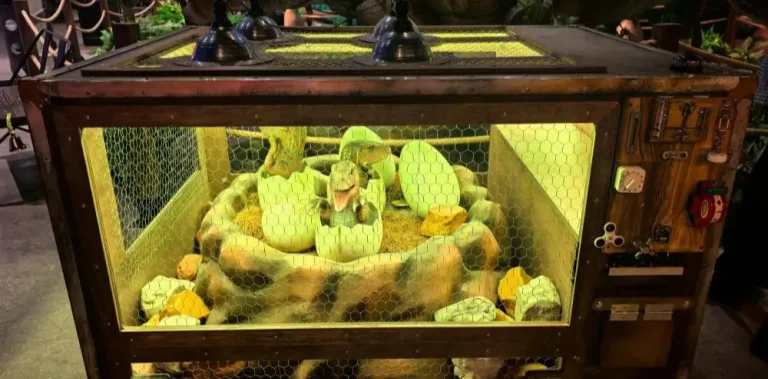
On site, these simulate early Earth ecosystems. You’ll usually see cave-dwelling dinosaurs, ancient reptiles, or nesting figures built into rock walls. The goal isn’t geology documentation. It’s a “lost world” feel.
2. Dinosaur Cave Attraction Models
One of the most commercially reliable setups. Operators blend dark limestone corridors, fog machines, and animatronic dinosaurs stepping out of rock openings. Visitors move through timed prehistoric scenes with narration guiding the “time layers.” This model consistently pulls family traffic and supports tourism revenue optimization through premium ticket tiers and extended seasonal runs.
3. Interactive Cave Wildlife Exhibits
Some venues skip dinosaurs and focus on bats, cave bears, amphibians, or fictional predators. Sensors trigger movement, making the environment feel reactive. Visitors notice it. That’s why this approach has become a staple for interactive cave exhibits.
4. Mythical Cave Experiences
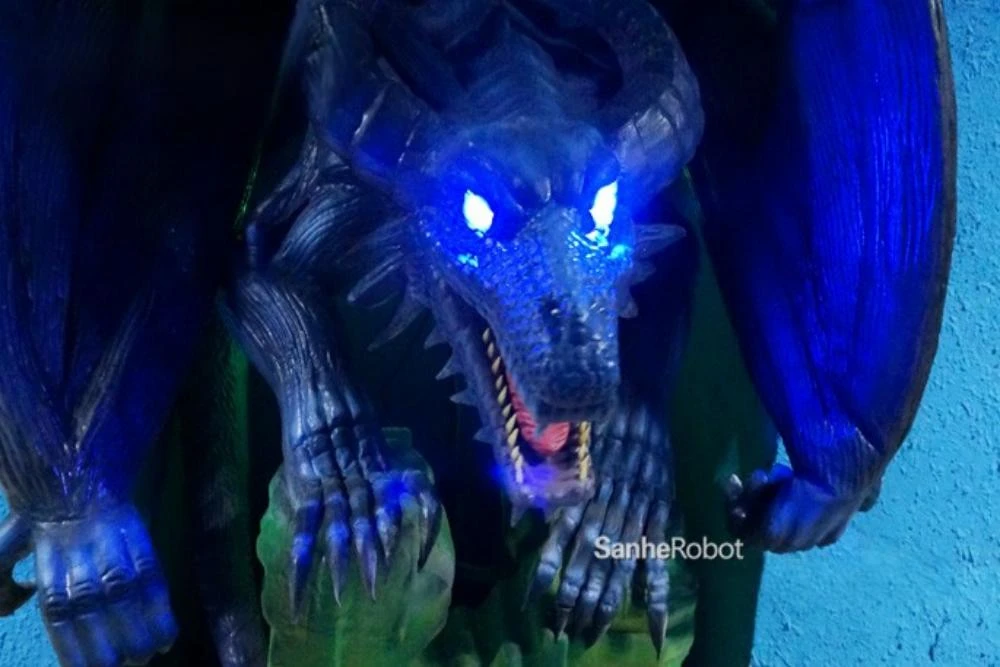
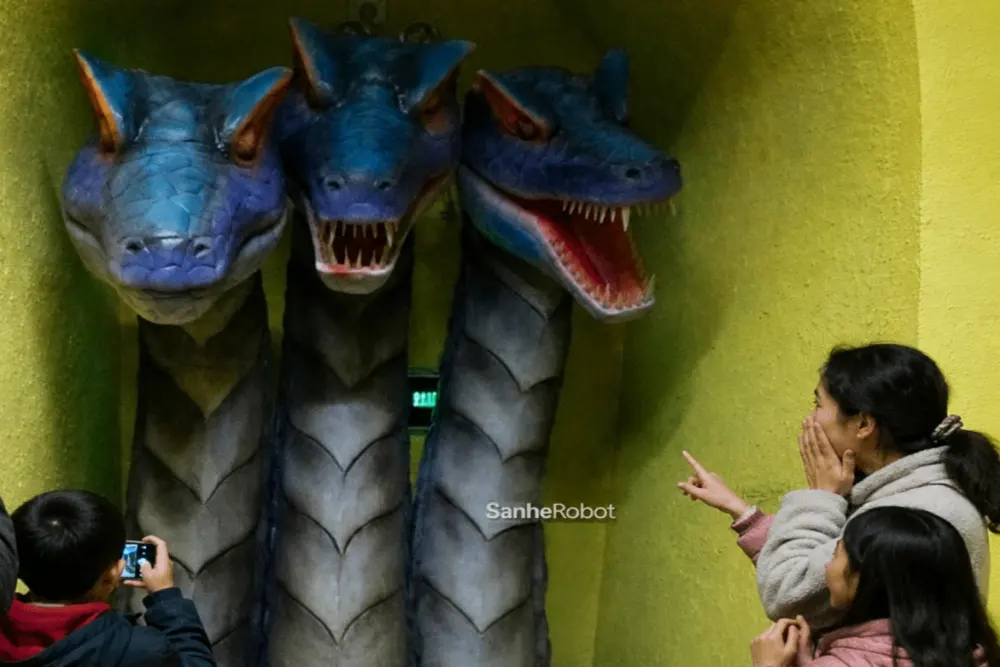
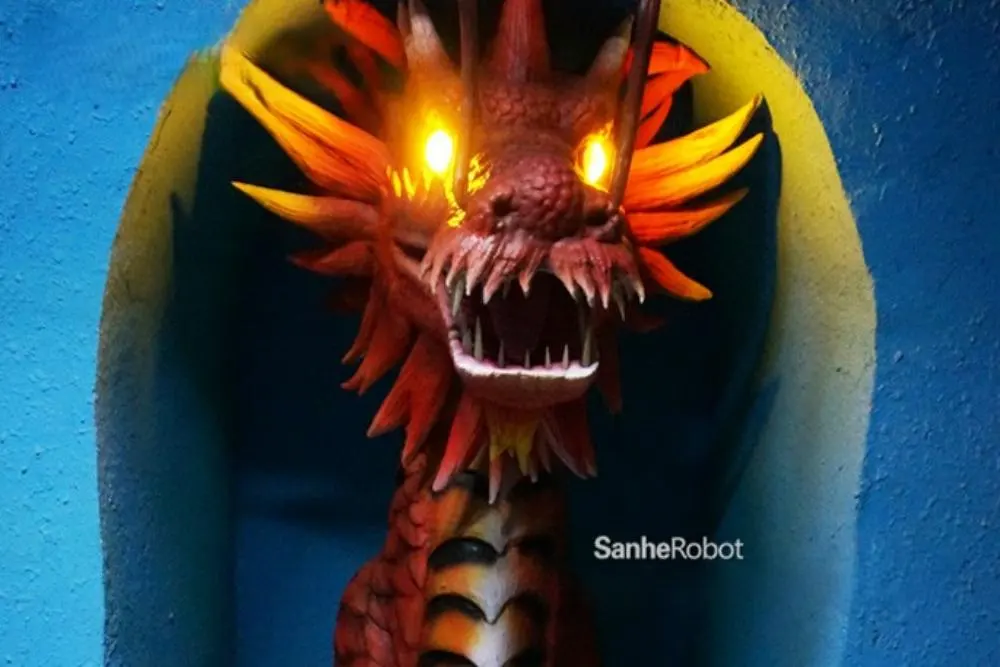
Dragons in underground chambers. Stone guardians. Cave spirits. These perform especially well in Asian and Middle Eastern markets where folklore drives attendance. Figures here tend to be slower, larger, and more atmospheric—less about fast motion, more about presence.

5. Educational Cave Exhibits
Science museums and heritage caves use animatronics to demonstrate extinct species behavior or cave ecosystem evolution. The priority is interpretation, not pure entertainment. Figures act as living dioramas, bridging textbook concepts with physical space.
6. Cave + Dark Ride Hybrids
Operators pair cave geology with slow-moving ride vehicles. Animatronics hit sightline peaks to deliver narrative beats as guests pass. It maximizes throughput while keeping immersion intact, making it a standard pick for ROI-driven cave attractions that need to balance capacity with experience quality.
7. Cave + Projection Mapping Integration
Figures get paired with mapped visuals on rock surfaces to stretch the perceived scale. A small animatronic can look like it’s “growing” or “transforming” when synced with projected light. Hardware costs drop. Visual impact goes up.
8. Cave + Escape/Exploration Logic
Visitors get a narrative goal (“find the artifact”) and animatronics act as clues or guardians. Gamification stretches group engagement and aligns with high dwell-time attraction design principles that prioritize interactive pacing over passive walkthroughs.
9. Seasonal/Modular Cave Deployments
Instead of permanent installs, some operators use modular units swapped seasonally. Prehistoric in summer, mythical in winter. It extends asset lifespan and gives locals a reason to return.
10. Multi-Sensory Cave Corridors
Animatronics sync with scent dispensers, directional audio, and micro-climate shifts (cool air, mist). The result feels biologically alive rather than mechanically placed. This is where the animatronic cave experience really separates itself from standard themed walkthroughs.
The Evolution of Cave Attractions in the Experience Economy
This isn’t about novelty. It’s about survival in a crowded tourism market. Three operational shifts are pushing caves toward mechanized figures:
1. Experience Economy Competition
Static geology doesn’t differentiate anymore. Venues now compete on narrative immersion, a trend widely discussed across the attractions industry by IAAPA.
2. Repeat Visitation Pressure
Single-visit cave tours bleed attendance during off-seasons. Animatronic storytelling adds modular narrative layers that encourage return trips, especially from families and school groups.
3. Operational Scalability & Conservation Alignment
Unlike structural expansions, animatronic deployments can be phased, relocated, or updated without permanent geological intervention. That flexibility fits modern budgeting cycles and heritage conservation rules.
In practice, caves are shifting from passive observation spaces into engineered experience platforms. Operators who adopt this model early usually lock in stronger market positioning and higher ticket elasticity.
Real-World Use Cases From Theme Parks and Educational Attractions
While exact deployments are often proprietary, the patterns we see across major markets break down like this:
North America Science Museums
Several institutions have layered cave simulation environments with animatronic prehistoric wildlife. The hybrid setup blends geology with paleontology without heavy structural modification.
European Heritage Cave Attractions
Historic cave networks in France, Slovenia, and Belgium are testing subtle motion systems and lighting narratives while balancing visitor engagement with conservation principles promoted by the International Show Caves Association.
Asian Theme Park Developments
Mythology-driven cave walkthroughs in China, Japan, and Southeast Asia frequently combine animatronic dragons, stone guardians, and environmental effects. Cultural storytelling drives the layout.
Australian Underground Exhibitions
Temporary and modular cave-style attractions have rolled out in convention centers and museums. Portable animatronic systems simulate underground environments where real geology isn’t an option.
These deployments all run into the same engineering constraints: humidity control, restricted maintenance access, and the constant balance between spectacle and conservation compliance.
How Animatronics Are Integrated Into Cave Attractions (Step-by-Step Process)
Deploying animatronics underground isn’t like a standard indoor install. You’re working with geological constraints, moisture, and conservation rules. Here’s the workflow we actually run on site:
1. Site Evaluation & Geological Assessment
Walk the cave. Map rock stability, moisture zones, and existing conservation protections. Non-invasive scanning verifies mounting points won’t compromise structural integrity or heritage status.
2. Environmental Mapping
We log humidity, temperature swings, and airflow for 7–14 days before ordering anything. You can’t guess IP ratings or material specs in a cave environment. The actual data tells you exactly what climate control and sealing each component needs.
3. Structural Constraints Analysis
Measure pathways, ceiling height, and egress routes. Load capacity and how narrow those access points are will decide whether you bolt things down permanently or use modular mounts. Skip this step, and installation day turns into a logistical bottleneck.
4. Animatronic Placement Strategy
Sightlines matter, but so does visitor flow and conservation zoning. We keep bases low-profile, run wiring recessed, and anchor everything with non-slip hardware. Narrow corridors don’t forgive sloppy placement.
5. Testing & Calibration
Before the public walks in, we run humidity-sealed electrical checks, validate motion ranges, and tune the acoustics. Echo mitigation, directional speaker alignment, safety cutoffs—it all gets verified on site. No shortcuts.
6. Maintenance Planning & Handover
Operators leave with a site-specific schedule, a domestic spare parts list, and remote diagnostics access. We build quick-release panels and tool-less access points into the units because you can’t drag heavy equipment through tight cave passages later.
This workflow cuts retrofitting costs, keeps you aligned with environmental guidelines, and stretches operational lifespan in high-moisture, restricted-access settings.
What Types of Animatronics Work Best in Cave Environments?
When it comes to what actually performs underground:
Animatronic Dinosaurs
Still the go-to for engagement. Caves naturally read as prehistoric, so the pairing makes sense. They thrive in large chambers or fog-heavy reveal zones.
Prehistoric & Cave Animals
Smaller figures often work better in tight spots. Cave reptiles, underground predators, amphibian models—they feel more believable at close range and handle humidity better than larger builds.
Cave Wildlife
Bats, insects, historical bears. Designed for venues prioritizing realism over spectacle. It’s quieter, more educational, and fits well with interactive cave exhibits that focus on ecosystem interpretation.
Mythical Creatures
Gives you creative freedom when realism isn’t the goal. Stronger branding potential, easier to differentiate from standard geology tours.
Historical or Narrative Characters
Explorers, miners, ancient inhabitants. Usually semi-animatronic or audio-visual hybrids. Less mechanical wear, which matters when maintenance access is restricted.
Engineering Challenges Inside Cave Environments
Caves are brutal on electronics. In the field, we run into the same five constraints every time:
Humidity & Corrosion
Constant moisture eats standard actuators alive. We don’t spec anything below IP65 sealing. Stainless fasteners, marine-grade lubricants—mandatory above 80% relative humidity.
Limited Lighting
Dark helps the atmosphere, but safety and maintenance need visibility. Recessed LED strips and motion-triggered zones usually solve it without breaking immersion.
Visitor Safety
Narrow, uneven paths mean controlled movement zones and figures anchored well outside primary egress lines. No exceptions.
Maintenance Access
This is where most projects fail. Caves rarely have freight elevators or wide service doors. That’s why modular design isn’t a nice-to-have—it’s the only way technicians can actually service the units later.
Sound Control
Echo-heavy spaces require careful speaker placement and directional tuning. Overlapping narration zones get muddy fast if you don’t plan the acoustics upfront.
Show Caves vs Traditional Static Exhibits
| Factor | Show Caves with Animatronics | Traditional Static Caves |
|---|---|---|
| Visitor Engagement | High | Moderate |
| Educational Value | Medium–High | High |
| Social Sharing | Very High | Low–Medium |
| Repeat Visits | Higher | Lower |
| Operational Cost | Higher | Lower |
The trade-off is obvious: more complexity, but significantly higher engagement potential and revenue per visitor.
Animatronics vs Projection & Static Setups: Field Comparison
Operators usually compare three options before breaking ground. Here’s what actually happens after installation:
Animatronics vs Projection-Only
Projections look good on paper, but cave dust and humidity kill them fast. Lenses fog up, lasers drift, and the image washes out. Animatronics hold up better in damp air. More importantly, cameras pick up physical movement better than light shows. We see visitors actually stop and point at moving figures. Projection setups often get walked past once the novelty fades.
Cost & Payback Reality
Static builds are cheap upfront. Projection rigs sit in the middle. Animatronics cost more initially because of sealing and motors. But in family markets, they pull premium ticket prices faster. We usually see the gap close in 3 to 5 years through repeat visits and extended seasonal runs. Projection systems also carry hidden costs: bulb replacements, server crashes, and constant recalibration.
Maintenance & Downtime
Static displays need almost nothing. Projection demands daily lens cleaning and software patches. Animatronics need quarterly grease and sensor checks. In high-humidity caves, mechanical units actually fail less often than projection servers once you spec IP65 housings and marine-grade parts. Fewer surprise breakdowns. That matters when your tech team is 20 minutes from the nearest service road.
Field note: Pick based on your moisture levels and tech staff. If you want reliable engagement without daily server troubleshooting, animatronics usually win long-term.
Can Small Animatronics Work in Cave Attractions?
Yes. Honestly, they’re often more practical.
Small units handle hidden storytelling, secondary movement effects, surprise reveals in tight corridors, and layered ecosystem simulation. In constrained spaces, subtle motion outperforms large spectacle. Immersion relies on realism, not scale. For operators looking at compact deployments, our breakdown of related compact animatronic systems designed for confined environments covers the exact sizing, power, and maintenance frameworks that apply directly to underground setups.
Frequently Asked Questions
Are animatronics safe in real caves?
Yes, provided they’re sealed correctly for humidity and restricted access. Commercial deployments standardly use IP-rated enclosures and low-voltage systems.
Do all show caves use them?
Not at all. Many still run purely on lighting and natural rock. Operators usually add mechanized figures when they need to stretch dwell time, attract families, or support higher ticket tiers.
What’s the most common type?
Dinosaurs and prehistoric animals dominate the themed dinosaur cave attraction market. Cave wildlife and mythical creatures come next for narrative-driven layouts.
Are they expensive to build?
Higher upfront than static exhibits, yes. But they typically pay back through extended seasonal operation, premium pricing, and higher attendance.
Can you modify natural caves?
Yes, but you have to respect geological protection and heritage rules. Non-invasive, modular mounting is the standard approach.
Lifespan?
Typically 3–8 years. It really depends on how well you manage humidity, sealing, and routine lubrication. Sensor calibration stretches it significantly.
Do visitors actually prefer them?
Family groups and repeat visitors consistently show higher engagement and satisfaction compared to static-only tours.
Biggest technical challenge?
Humidity and corrosion. Electrical components and moving joints will fail without specialized sealing and a strict inspection schedule.
What about very small caves?
Totally workable. You just shift to compact or hidden systems—low-profile actuators and recessed mounting become mandatory.
Suitable for museums?
Yes. Museums usually run slower, scientifically accurate models paired with interpretive signage. It fits the interactive cave exhibits model well when education is the priority.
Planning a Cave Attraction With Animatronics?
Evaluating animatronics for a cave environment isn’t something you rush. It takes site-specific engineering analysis—humidity tolerance, access limits, long-term maintenance strategy. Getting technical consultation upfront helps prevent costly retrofitting later and keeps you aligned with conservation standards.
If you’re assessing feasibility for a natural cave, constructed tunnel, or underground exhibition space, our engineering team can provide tailored solutions. For projects that require unique layouts, environmental protection measures, or site-specific storytelling, many operators choose custom animatronics rather than standard off-the-shelf models.:
✅ Preliminary humidity & corrosion risk assessment (based on your site data)
✅ IP65+ sealing recommendations and marine-grade material guidance
✅ Modular installation planning for narrow or uneven access points
✅ Maintenance cost framework & spare parts availability overview (based on typical cave deployments)
These inputs help you build a realistic project plan. Proper implementation takes careful engineering, but it consistently lifts visitor engagement and operational value across cave-based attractions.
👉 [Request Cave Attraction Technical Consultation →]
Written by Wang Chao | Engineering & Installation Director at Sanhe
Wang Chao oversees precise global installation and smooth project commissioning for Sanhe’s animatronic deployments. He focuses on standardizing engineering workflows, optimizing placement strategies, and ensuring long-term operational reliability across diverse venue types. His insights help operators balance immersive design with practical maintenance, compliance, and scalability requirements.