Tell Us About Your Project

Which Dinosaur Was as Fast as a Cheetah
Quick Answer:
No dinosaur matched a cheetah. Cheetahs hit 60–70 mph (97–113 km/h). The fastest dinosaurs, like Gallimimus and Ornithomimus, maxed out around 30–40 mph (48–64 km/h). Gallimimus is generally considered the fastest dinosaur.
People often ask which dinosaur was as fast as a cheetah. In reality, no known dinosaur reached the speed of a modern cheetah.
A cheetah is a specialized sprinting machine. Dinosaurs, even the fast ones, had different physical priorities. But looking at which dinosaurs came closest to cheetah speeds tells us a lot about how they moved and survived.
Why No Dinosaur Could Touch a Cheetah
Cheetahs are built purely for acceleration. Flexible spine, specialized claws, massive lungs. They are lightweight (100-150 lbs) and packed with fast-twitch muscle.
Dinosaurs were heavier. A Gallimimus weighed around 440 pounds. Moving that much mass at 70 mph requires a completely different skeletal structure. Evolution didn’t push dinosaurs toward pure sprinting speed. They needed endurance, balance, and stability more than a 3-second 0-to-60 time.
What Was the Fastest Dinosaur Ever?
Here is how the top dinosaur running speed estimates compare to modern animals:
| Animal | Estimated Top Speed |
|---|---|
| Cheetah | 60–70 mph |
| Pronghorn | 55 mph |
| Ostrich | 43 mph |
| Gallimimus | 30–40 mph |
| Ornithomimus | 30–40 mph |
| Velociraptor | 20–25 mph |
| Human (Usain Bolt) | 28 mph |
Gallimimus is generally regarded as the fastest known dinosaur. While older papers threw around numbers like 50 mph, recent biomechanical models are more conservative, putting it in the 30–40 mph range.
The following dinosaurs are generally considered the fastest running dinosaur species discovered so far:
- Gallimimus: The speed champion (30-40 mph).
- Ornithomimus: A close second, similar bird-like build.
- Struthiomimus: Another “ostrich mimic” built for quick escapes.
- Velociraptor: Slower (around 25 mph). It relied more on agility and stealth than raw sprinting speed.
The Fastest Dinosaurs: The Details
Gallimimus
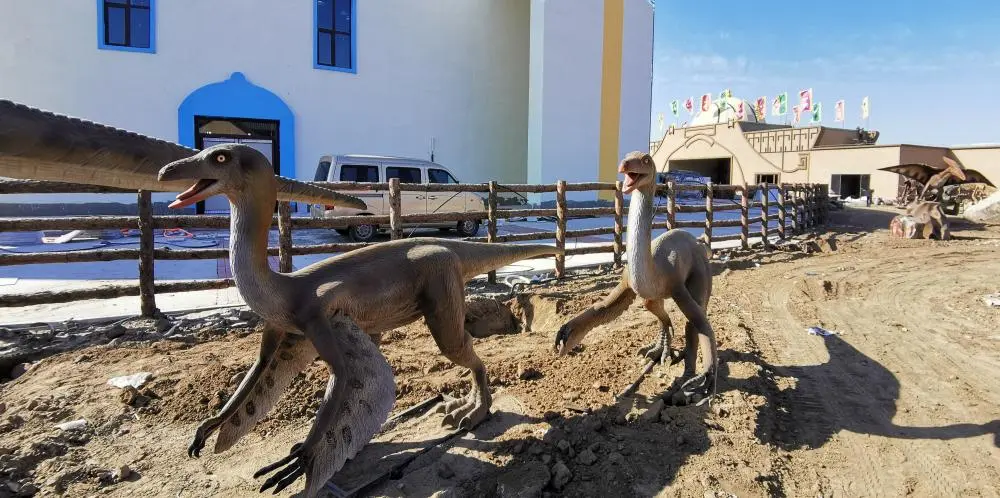
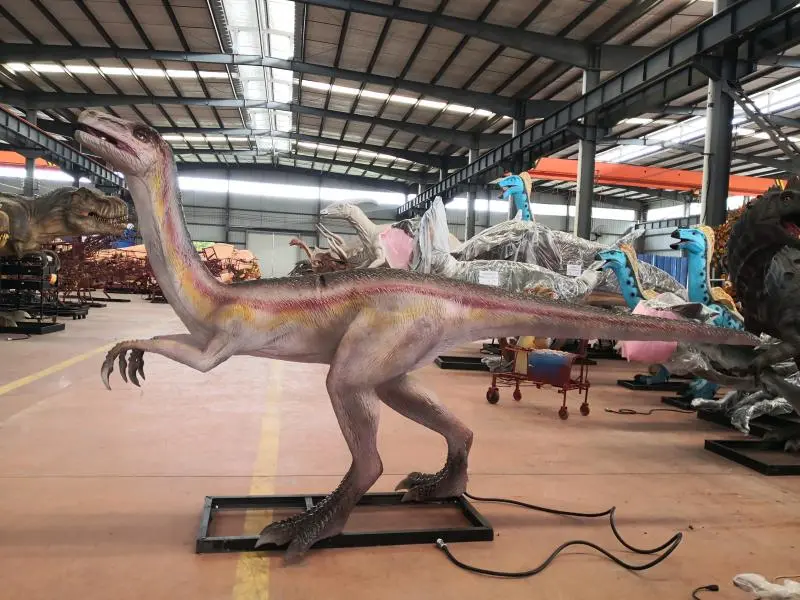
You’ve seen the stampede scene in Jurassic Park. That’s actually based on decent science. It had long legs, hollow bones, and a streamlined body. Some researchers think its long arms helped with balance during sharp turns, but that’s still debated. It wasn’t hunting with that speed; it was running away from things like Albertosaurus.
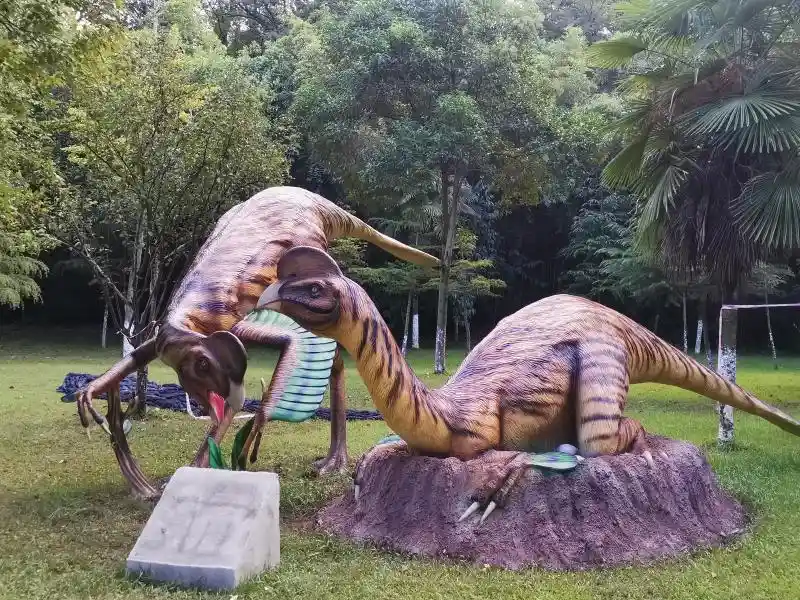
Literally “bird mimic”. Speed estimates are similar to Gallimimus, around 30-40 mph. It didn’t have teeth, just a beak. It was likely an omnivore that used its speed to escape predators rather than chase down prey.
Struthiomimus
Very similar to the other two. Another “ostrich mimic” from the Cretaceous. Built for open environments where spotting predators early and running fast was the only defense.
What About Velociraptor?
Movies got this wrong. It wasn’t a 70 mph sprinter. More like 25 mph. It was an ambush predator. It relied on stealth and those sickle claws, not outrunning a cheetah.
Why Were Ostrich-Like Dinosaurs So Fast?
The ornithomimids (the ostrich-like group) shared a few specific traits that made them the fastest running dinosaur group of the Mesozoic era:
- Long legs. Simple physics. Longer legs mean longer strides.
- Hollow bones. Pneumatic bones kept weight down without losing structural integrity.
- Balanced center of gravity. Perfect for bipedal running. No heavy armor or dragging tails.
- Small heads. Kept the front end light. Compare that to a T-rex trying to sprint with a massive skull.
- Long stride length. Trackways show they could cover 2.5 to 3 meters in a single step.
Why Speed Mattered
It was about survival. Prey animals needed to outrun predators. Predators needed enough speed to catch a meal without burning out. Speed is a trade-off. Faster animals are usually lighter and more fragile. That’s why a 9-ton T-rex couldn’t run 70 mph. It maxed out around 20-25 mph.

How Scientists Estimate Speed
We don’t have speedometers for fossils. When scientists try to answer the common question, “How fast could dinosaurs run?”, they rely on a few methods:
Trackways: Footprints in mud. This is the most direct way to measure dinosaur running speed. You measure stride length and estimate hip height, then plug it into a formula. It’s not perfect. A 2025 study pointed out that traditional formulas might overestimate speed for larger dinos. New biomechanical research continues to refine these numbers.
Bone Biomechanics: Looking at muscle attachment points and joint range of motion. Building computer models to see how much force the muscles could actually generate.
Computer & Robotic Modeling: Using software to simulate gaits. Sometimes building physical robotic limbs to test the mechanics.
Modern Birds: Birds are theropod dinosaurs. Studying how fast ostriches and emus run gives us a baseline.
Bringing Dinosaur Speed to Life
We can’t see a real Gallimimus run. But in the animatronics industry, we deal with this a lot.
Clients (museums, theme parks) always want the fast dinosaurs. Gallimimus and Velociraptor are top sellers because people associate them with action.
On a recent museum project, we built a full-size Gallimimus. Since it’s on a fixed base, it can’t actually run. The engineering challenge was making it look like it was about to run. We used a 7-axis servo system. We programmed the head to track visitors and added subtle tail counterbalance movements. When the sensors trigger the “alert” sequence, the head snaps, the tail flicks, and it vocalizes.
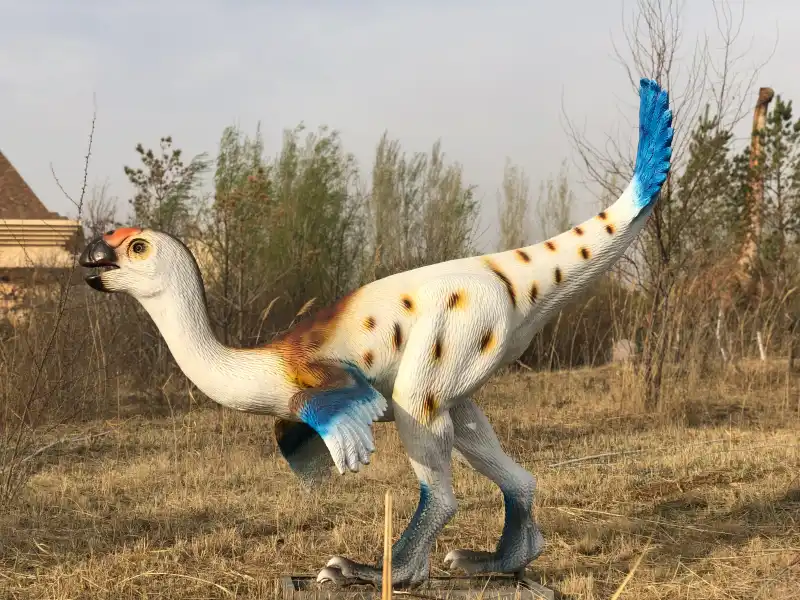
Visitors react to it. Kids mimic the head movements. Adults step back.
That’s the goal of precision animatronics. You don’t need the model to physically run across the room. You just need the head tracking, tail articulation, and sound to make the static frame feel alive.
Curious how these engineering principles translate into real exhibits?
If you’re planning a dinosaur exhibition or themed attraction, explore our Gallimimus and Velociraptor animatronic models to see how realistic movement is recreated.
No dinosaur matched a cheetah. That’s just biology and physics. But studying how they moved helps scientists understand dinosaur evolution. In our line of work, we take those scientific findings and turn them into animatronic displays for museums and parks. Speed is one of the most interesting parts of dinosaur biology, and it’s definitely one of the most exciting things to recreate in a modern attraction. Contact us to discuss your next exhibition project.
Frequently Asked Questions
No. Fastest dinos were around 40 mph. Cheetahs do 60-70 mph.
Gallimimus. Older studies said 50 mph, but modern estimates say 30-40 mph.
No. They were slower than most modern passenger vehicles.
Most dinosaurs could run between 20 and 40 mph, with the absolute fastest species reaching up to 50 mph. Scientists estimate these speeds using fossil trackways, bone biomechanics, and computer modeling. While it remains an educated guess, robotics and new technology are making the data much more accurate.
Because a T-rex chasing a jeep at 20 mph isn’t very cinematic. Hollywood exaggerates.