Tell Us About Your Project

How Animatronics Are Changing Live Entertainment and Stage Shows
A director may want a character to stand beside a live actor, move on cue, react at a precise dramatic moment, and repeat the same performance night after night. The creative idea may be straightforward. But making that idea work reliably within an animatronic show is a different challenge entirely.
How do you create that physical presence without turning the entire production into an engineering problem?
This is where animatronics are becoming a practical tool in modern live entertainment and stage performance. When engineered correctly, an animatronic character is not simply a visual effect placed on a stage; it becomes a functional part of the performance system. For directors, producers, and entertainment project teams, the real question is how to integrate a physical character that actually serves the story. It requires looking past the visual spectacle and understanding what it takes to make a mechanical character work within the creative, technical, and operational demands of a live production.
Why Physical Presence Matters on Stage
Before looking at the mechanics, we have to understand why a physical character changes the dynamic of a room.
Scale Creates a Different Audience Experience
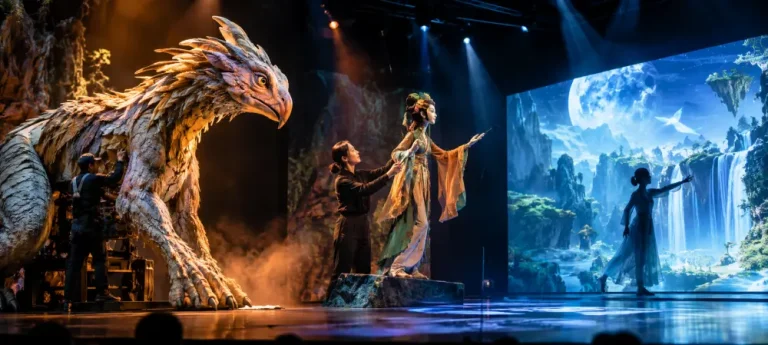
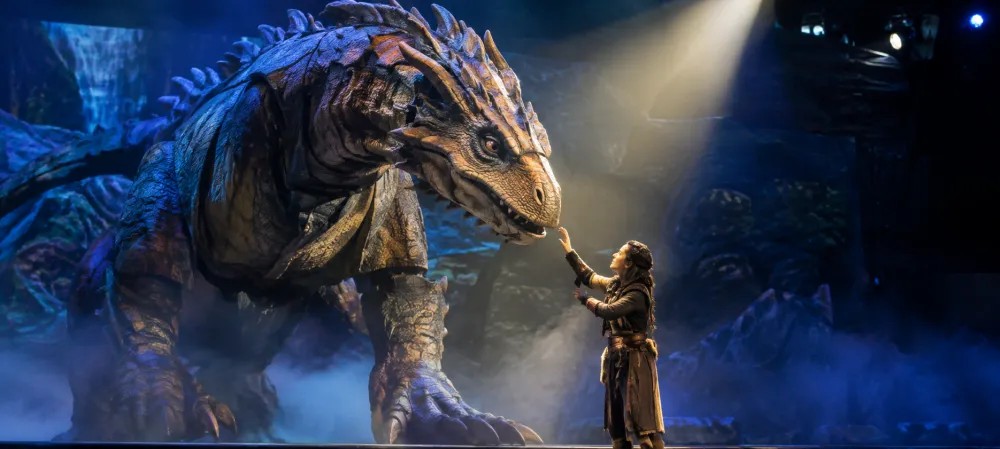
There is a massive difference between watching a giant creature on a screen and watching one stand ten feet from the front row. Large physical characters change the audience’s perception of scale and proximity in ways projections cannot. When a massive creature moves through physical space, it adds movement and interaction to the experience. It doesn’t necessarily mean “more realistic is better.” Rather, physical presence creates an entirely different layer of storytelling.
Movement Becomes Part of the Performance
An animatronic character isn’t just a static sculpture that occasionally twitches. Through subtle movements, programmed gestures, and carefully timed physical responses, the character participates in the rhythm of the scene. Movement itself becomes part of the performance language. A slow turn of the head can build tension just as effectively as a lighting cue.
Physical Characters Can Interact With Performers
This is where physical interaction becomes particularly valuable. When you have actor interaction, shared stage space, and aligned eye lines, the interaction can feel more immediate and physically grounded. But once a physical character shares the stage with live performers, its design has to consider much more than just appearance. It has to consider the human beings working right next to it.

Where Animatronics Fit Into Live Entertainment
Not every show needs a mechanical creature. But when the creative and technical requirements align, they can serve specific roles within a live production.
Character-Based Performances
For fantasy characters, creature roles, and story-driven productions, character presence is everything. The combination of physical movement, spatial presence, and performer interaction makes animatronic characters ideal for bringing non-human roles to life without relying entirely on CGI or suits.
Large-Scale Stage Moments
Think about the creature reveal, the dramatic entrance, or the massive transformation. Physical scale can make a particular moment structurally important to the audience experience. It anchors the spectacle in reality.
Immersive Theatre and Themed Shows
In immersive entertainment and themed environments, storytelling isn’t confined to a proscenium arch. Animatronics can become part of the environment itself, supporting environmental storytelling rather than simply functioning as a standalone prop.
Touring and Repeat Performances
This is a critical area often overlooked. For a touring production or a resident show, the same movement sequences may need to be repeated hundreds of times. The equipment has to be transported, the setup needs to be repeatable, and the performance schedule leaves little room for technical disruption. In this context, failure has real financial and artistic consequences.
What Animatronic Characters Add to a Stage Performance
Let’s look at what animatronic characters actually bring to a stage performance, beyond just looking impressive.
Controlled Movement
Movement can be designed around the choreography and dramatic timing of a scene. Through controlled, programmed movement, technical directors can design a creature’s reaction to align closely with the timing of a musical cue or an actor’s dialogue.
Repeatability
In a theatrical production, consistency is key. An opening sequence—where a character wakes up, turns its head, reacts to a sound, and settles back down—needs to happen the same way every night. While no machine is flawless, a well-engineered system is designed for repeatable performance, giving the stage manager confidence in the cue sheet.
Physical Scale and Presence
As mentioned earlier, the sheer physical volume of a well-built creature commands attention and grounds the fantasy elements of a show in physical reality.
Interaction With Performers
Animatronics are not built to replace actors. In many productions, the strongest effect comes from the relationship between the live performer and the physical character. The technology extends what the performers can achieve, creating a shared reality on stage.
Animatronics Are Not the Only Way to Bring a Character to the Stage
It is vital to remember that the right technology depends entirely on the production.
| Technology | Typical Strength |
|---|---|
| Animatronics | Physical movement, programmed character behavior, and repeatable mechanical precision. |
| Puppetry | Performer-driven expression, mobility, and organic movement. |
| Projection | Visual transformation, massive scale imagery, and rapid environmental shifts. |
In a modern production, the technology is not necessarily the character itself. It can be one layer within a larger stage performance system. If you’re deciding between animatronics, puppetry, and projection, the choice starts with the demands of the show rather than the technology itself. You can explore this comparison in depth in our guide to choosing between animatronics, puppetry and projection.
What Changes When Animatronics Become Part of a Production
Here is where we cross the line from creative brainstorming to hard engineering. The moment an animatronic character becomes part of a live production, the creative brief also becomes an engineering brief.
Stage Load
Stage planning is not only about the static weight of the character. Movement introduces dynamic loads that have to be considered alongside stage structure and mounting points, often requiring adherence to rigorous safety guidelines like those established by the [Entertainment Services and Technology Association (ESTA)]. A character that works perfectly in a workshop may not automatically work on a stage, especially when you factor in the forces it generates while moving.
Performer Movement
The machine has to work with the performer, not against the performer. You need to map out actor paths, interaction distances, and choreography. If the movement path is not properly coordinated with the performer, the illusion can be broken and safety can become a concern.
Access and Installation
How does it get on stage? Backstage space is always limited. You have to plan for assembly, transport, setup, and the strike. For touring productions, setup time directly affects crew requirements, venue schedules, and operating costs.
Power and Control
Power, control, cue timing, and communication with the wider production system all need to be considered early. The control system needs to be robust enough to handle live performance variables and integrate seamlessly with the rest of the show’s technical cues.
Show Frequency
An occasional performance has very different requirements than a daily show running multiple times a day. Motor duty cycles, power requirements, thermal considerations, and maintenance demands all change with show frequency.
Failure Tolerance
The more frequently a show runs, the more important reliability and failure planning become. You don’t just design for when it works; you design for what happens when it doesn’t, and how quickly the crew can recover the scene.
From Character Concept to Stage System

The strongest concepts for an animatronic show are rarely designed as standalone products. They are developed from the needs of the production. The workflow should follow a clear sequence:
- Script: What does the character need to do in the scene?
- Character Concept: What physical presence supports the story?
- Movement Requirements: Which movements are essential to the performance?
- Mechanical Design: How can those movements be achieved within stage constraints?
- Control: How will movements be triggered and synchronized?
- Fabrication: How is the system built for repeated use?
- Testing: Can the system handle expected performance conditions?
- Stage Integration: How does it work with performers, scenery, and production operations?
The production requirements come first. The animatronic system is engineered around them rather than treated as a standalone product to be integrated later. If you want to see how this philosophy translates into actual practice, take a look at our theatrical performance and stage solutions.
When Animatronics May Be the Right Fit for a Show
To help you gauge if animatronic characters align with your current production, consider whether they fall into these categories:
- Large-Scale Creature Reveals: When the physical scale of the character is the core of the dramatic effect.
- Fantasy and Creature Characters: When the role requires physical movement, presence, and direct performer interaction (including prehistoric productions like dinosaurs).
- Immersive Theatre and Themed Shows: When the character needs to exist in the audience’s physical space and drive environmental storytelling.
- Theme Park and Resident Shows: High-frequency, visually spectacular live shows where repeatability and operational reliability are critical.
- Touring Productions and Branded Live Entertainment: When repeatability, transport, setup, and strict operational requirements define the project.
Designing for the Show, Not Just the Character
Successful animatronic characters in live entertainment are not defined only by how they look. They are defined by how they move, how performers interact with them, how they enter and leave the stage, how they are installed, how often they perform, and how they fit into the broader production system.
The goal is not simply to build an animatronic character. It is to build a stage-ready system that serves the production.
Conclusion
An animatronic show is becoming another production tool for live entertainment—not a replacement for performers, puppetry, projection, or other stage technologies. Their value comes from how well they fit the story, the performers, and the operational demands of the show.
Technology should follow the production, not the other way around.
Planning an animatronic element for a live production? Considering movement, stage load, performer interaction, access, and touring requirements early in the process can preserve more creative options later. Explore our stage solutions to see how production requirements can be translated into stage-ready systems.