Tell Us About Your Project

How to Recreate a Jurassic Park Experience with Animatronic Dinosaurs: 5 Design Principles That Actually Work
When venue operators look for an animatronic dinosaur jurassic park setup, they aren’t just searching for a robot. They are searching for a feeling — that moment when a T-Rex steps into view and everything changes.
But here’s the truth: you don’t need a Hollywood budget to recreate that exact feeling in your venue. The most memorable scenes in the original film weren’t CGI magic. They were practical, physical animatronics. And today, you can build that same visceral experience for your theme park, museum, or shopping mall.
Table of Contents
The Real Secret Behind Jurassic Park’s Realism (And How to Build It Today)
It wasn’t just the roar. It was the physical presence.
The original movie relied heavily on massive, hydraulic-driven puppets. What made them feel alive wasn’t just the movement; it was the weight. The slight hesitation before a jaw snapped shut. The way the foam-latex skin caught the rain and the light. It occupied real, physical space.
When visitors see a physical dinosaur, their brains react differently than when they look at a screen. It’s about visceral reality. That physical weight is exactly what we need to replicate in modern theme park dinosaur design.
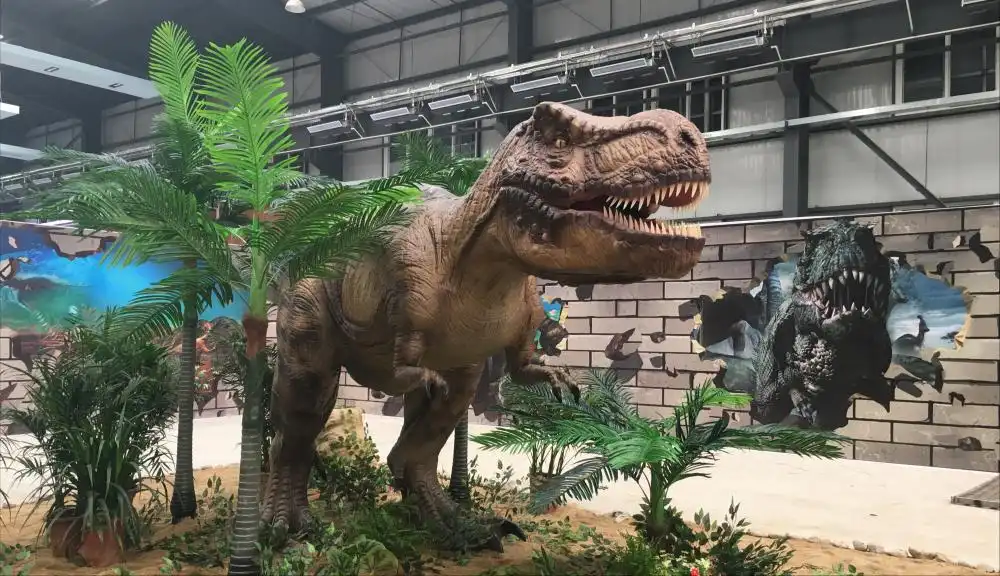
Absolutely, the technology has evolved massively since the 90s. Back then, they used heavy hydraulics and foam. Today, a modern animatronic T-Rex uses advanced servo motors, platinum-cured silicone skins, and sophisticated PLC control systems. You don’t need a 9,000-pound machine that breaks the floor. Modern commercial builds use lightweight aluminum frames and carbon fiber, making them safer, more energy-efficient, and incredibly lifelike. The goal isn’t to build a fragile movie prop; it’s to build a durable, interactive experience for a commercial dinosaur attraction that can run 10 hours a day.
What Most People Get Wrong About Jurassic Park Attractions
Here is the biggest mistake we see. Clients come to us and say, “We want a full animatronic dinosaur jurassic park setup.”
But that’s the wrong mindset. You aren’t building a movie set. You are building a commercial venue.
If you just drop a movie-style T-Rex in the middle of a shopping mall without context, it looks cheap. It looks like a toy. What clients actually need isn’t the “Jurassic Park movie.” They need the “Jurassic feeling.” And achieving that feeling requires understanding how the movie manipulated visitor psychology, and adapting it to your specific floor plan.
5 Design Principles for a Jurassic Park-Style Attraction
To recreate that movie magic with an animatronic dinosaur attraction, you have to design the environment, not just the robot. Here are the 5 principles we use to build that immersive feeling:
| Principle | Commercial Application | Visitor Impact |
|---|---|---|
| Scale & Sightlines | Use massive herbivores at entrance | Instant awe, sets expectation |
| Sound Before Movement | Hide speakers, play breathing sounds first | Builds tension, increases immersion |
| Environmental Integration | Use artificial plants & strategic lighting | Hides mechanics, enhances realism |
| The “Uncanny” Timing | Program idle breathing & micro-movements | Makes robots feel alive, not mechanical |
| Strategic Photo Spots | Design specific lighting & safe angles | Drives social media sharing & free marketing |
Notice the pattern? None of these are about the dinosaur itself. According to the Themed Entertainment Association, successful attractions always prioritize immersive storytelling over individual elements.

Real Projects & Planning Your Own “Jurassic” Experience
Let me give you a real example of a Jurassic Park-style attraction project. A theme park client wanted a dense jungle walkthrough. Instead of just lining up animatronic dinosaurs along a path, we applied the “Sound Before Movement” principle.
We hid subwoofers in the artificial rocks. Visitors felt the low-frequency rumble in their chests before they even saw the Velociraptor twitch in the ferns. By the time the dinosaur actually moved, the visitors were already terrified and fully immersed. The dwell time in that specific zone was off the charts.
We weren’t just placing animatronic dinosaurs to scare people. We were trying to make visitors believe something was hiding in the jungle.
Interestingly, visitors almost never talk about the speakers afterwards. They simply say, “It felt real.”
Instead of asking visitors what dinosaur they liked most, we usually watch where they stop. That’s often more revealing. If families slow down, take out their phones, and start pointing things out to each other, we know the scene is working. That kind of observation rarely appears in technical specifications, but it tells us far more about whether an attraction succeeds.
Recreating the magic of a theme park dinosaur experience isn’t about buying the most expensive robot. It’s about understanding sightlines, sound design, and visitor psychology. Every venue is different. A layout that works for an outdoor theme park will fail in an indoor mall.
If you’re planning a dinosaur attraction, don’t just ask for a price list. Share your floor plan and your visitor goals. We’ll help you design an experience that makes your visitors feel like they’ve stepped into the movies.