Tell Us About Your Project

Lifelike Dinosaur Costume: What Commercial Buyers Wish They Knew Before Ordering
A lifelike dinosaur costume can quickly become one of the strongest visitor-engagement tools you’ll deploy. But we’ve learned this the hard way.
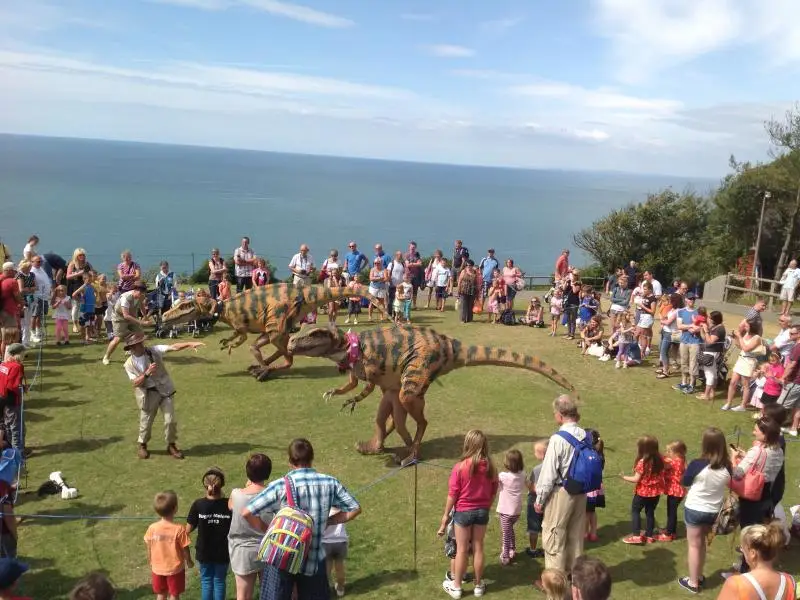
During an outdoor dinosaur event in Kazakhstan, our T-Rex costume performer became the main attraction of the entire venue. Children chased the dinosaur across the event grounds, laughing and screaming with excitement. Parents stopped everything to take photos and videos. Local attendees told us the roaming dinosaur created more energy and social content than several static displays combined.
But here’s what most guides won’t tell you: not every lifelike dinosaur costume survives commercial reality. We’ve rebuilt more costumes than we’d like to admit. And one problem shows up repeatedly: materials that look fantastic in factory photos but start failing after a few months of public use.
This guide covers what actually matters—the real pricing, durability trade-offs, and supplier vetting steps we wish we’d known before our first deployment.
Table of Contents
What Actually Makes a Lifelike Dinosaur Costume “Commercial Grade”?
Professional setups don’t just look the part. They’re structured for operation: realistic proportions, surface textures that hold up under repeated handling, movement systems without lag, internal supports balanced at hips and shoulders, and cooling channels for long shifts.
But here’s where most buyers get tripped up: they focus on the skin and ignore the frame.
A few years ago, we inspected a costume that looked fantastic on delivery day. Six months later, the skin started tearing around the neck and shoulder joints. The reason wasn’t the paint job. The internal frame was made from lightweight PVC instead of steel. After weeks of daily operation, the frame flexed under stress, creating micro-tears in the silicone skin.
In commercial environments, a well-built lifelike dinosaur costume relies on reinforced steel structures and proper ventilation far more than most buyers initially realize.

The Three Types of Lifelike Dinosaur Costume (And Which One We’d Choose)
1. Wearable Animatronic Dinosaur Costumes ($5,000–10,000)
These blend performer control with embedded mechanics. Jaws open on cue, eyes track, necks pivot, tails sweep.
Best for: Theme parks, premium exhibitions, tourism corridors
Pros: Peak realism, strong guest interaction, high social share rate
Cons: Scheduled maintenance, operator training, power management
If budget allows, this type of wearable dinosaur costume is usually the option we’d choose ourselves. It’s not the cheapest. But when visitors stop, point, and start taking photos, this category is usually creating that reaction.
2. Static Realistic Dinosaur Costumes ($3,000–5,000)
No motors. No moving joints. Just high-fidelity appearance built for visibility.
Best for: Trade shows, pop-up promotions, short-duration events
Pros: Lower upfront cost, lightweight transport, minimal upkeep
Cons: Lower interaction depth, less dynamic visual pull
Sometimes a static costume is exactly what you need. For a weekend trade show, it makes no sense to invest in motors. But if you’re planning daily operations, the lack of movement becomes noticeable fast.
3. Hybrid Dinosaur Costume Systems ($8,000–18,000)
Modular setups. The base is wearable, but specific zones (head, jaw, sound) run on controlled actuators.
Best for: Museums with rotating programs, touring education kits
Pros: Cost-to-realism balance, simplified servicing, flexible deployment
Cons: Slightly longer setup time, careful handling of detachable modules
We’ve found these work particularly well for museums. They can run the costume in “static mode” for quiet gallery hours, then activate motors for scheduled educational demonstrations.
What Actually Drives Realism? (Lessons From Our Factory Floor)
Skin Construction
Entry setups lean on latex or basic foam. Commercial builds switch to high-density foam with silicone overlays. Premium tiers use full silicone skins, hand-carved scale patterns, and multi-pass airbrushing.
Here’s something we’ve learned: always ask suppliers for Shore A hardness data instead of relying on appearance alone. We’ve seen costumes with silicone that was simply too soft—around Shore A 30-35. It looked great initially, but started tearing within months. Professional commercial costumes should use 40-50 Shore A silicone. Soft enough to look fleshy, firm enough to hold shape under stress.
Internal Structure
A frame isn’t just scaffolding—it’s the performer’s exoskeleton. Professional builds use reinforced steel or aircraft-grade aluminum, with weight anchored at the hips and shoulders. Poor balance kills movement quality fast.
We now require third-party load calculations before shipping any commercial commercial dinosaur costume. Many venues will request additional structural proof before approving installation.
Ventilation & Safety
Long shifts demand airflow. Commercial units include internal fans, mesh exhaust channels, ergonomic harnesses, and quick-release buckles. These aren’t optional—they’re liability controls.
Most commercial builds allow 30–60 minute operating cycles before mandatory cool-down periods. We’ve seen performers overheat in poorly designed suits, and it’s not a risk worth taking.
Real Deployments: What We’ve Actually Seen Work
Industry benchmarks from organizations like the Themed Entertainment Association (TEA) consistently show that interactive, roaming elements significantly outperform static displays in driving guest dwell time. We’ve seen this firsthand across different venue types.
Outdoor Events & Festivals
Unlike a traditional realistic dinosaur mascot that just stands there, moving dinosaurs create unforgettable moments. Our Kazakhstan outdoor event proved this. The costume performer became a roaming attraction that activated the entire venue, with children chasing the dinosaur across open spaces and creating organic social content that spread far beyond the event itself.
Museum Education Programs
Live demonstrations outperform text panels. Costumes turn passive viewing into Q&A sessions, tactile learning, and group engagement. Kids who would normally spend 30 seconds reading a plaque end up spending 10-15 minutes asking questions and touching the costume.
Theme Park Walk-Arounds
Roaming characters activate dead zones and create memorable photo opportunities. A budget static costume might work for a small regional park. But if you’re competing with major theme parks, guests expect interaction and movement.
What Commercial Buyers Actually Pay
When budgeting for a lifelike dinosaur costume, most commercial buyers eventually end up in one of three ranges.
At the lower end ($3,000–5,000), you’re looking at basic foam skin, PVC or lightweight aluminum structure, no motors or very limited movement, optional audio, and typically a 3-month warranty. This works for one-off events or short-term rentals. We don’t recommend this for daily commercial operation.
For museums and family attractions ($5,000–10,000), you’re paying for a foam + silicone skin system, reinforced steel frame, limited animatronic features (2-4 motors), integrated audio, and usually a 1-year warranty. This is the sweet spot for most educational and mid-tier commercial venues. It’s where we see the best balance between cost and operational capability.
Theme parks and premium exhibitions usually invest $18,000–35,000+. At this level, you get full silicone skin with hand-sculpted textures, advanced lightweight structure, full animatronic control (8-12 motors), advanced interactive audio systems, and 2+ year warranty. If you’re competing for visitor attention in a high-traffic commercial environment, this is typically what delivers the ROI.
Hidden costs nobody talks about:
- Shipping (crated freight: $500-$2,000)
- Import duties (5-15% for international orders)
- Spare parts kit (budget 10% of purchase price)
- Performer training ($500-$2,000)
Supplier Evaluation: What We Actually Check
Before committing, we verify:
✅ Commercial project references – Active deployments you can visit or video call
✅ In-house production capacity – Not outsourced assembly. We’ve been burned by traders posing as manufacturers
✅ CE / FCC documentation – With verifiable certificate numbers, not just blurry photos
✅ Material spec sheets – Silicone grade, frame alloy, motor rating. If they can’t provide these, walk away
✅ Written warranty – With clear exclusions and response SLAs
✅ Live factory video walkthrough – Current production floor, not pre-recorded showroom tours
When vetting a lifelike dinosaur costume supplier, remember that their ability to support long-term operation is often more important than the initial purchase price. We’ve seen buyers “save” $5,000 upfront, then spend triple on retrofitting and emergency repairs.
Lifespan: The Question Nobody Can Answer Accurately
How long will a lifelike dinosaur costume last? It depends.
We’ve seen low-cost suits fail within a year due to daily operation without proper maintenance. We’ve also seen professionally maintained costumes remain in operation for many years.
Usage frequency, storage conditions, performer training, and maintenance discipline often matter more than the original purchase price.
That said, here’s what we typically see:
- Budget costumes: 1-2 years with light use (50-100 hours)
- Commercial grade: 3-5 years with proper maintenance (300-500 hours)
- Professional animatronic: 7-10 years with scheduled servicing (1,000+ hours)
But these numbers assume proper storage, regular maintenance, trained performers, and climate-controlled environments. Run any lifelike dinosaur costume in extreme heat without cooling breaks, and those timelines drop dramatically.
Questions Clients Actually Ask Us
Picking the right lifelike dinosaur costume isn’t a visual decision. It’s an operational one.
If you’re scoping a lifelike dinosaur costume for an outdoor event, museum, theme park, or tourism corridor, We can help map out: Browse our complete commercial dinosaur costume collection to see available sizes, animatronic options, and customization details.
Written by Vicky | Project Coordination Lead at Sanhe
Responsible for global coordination and on-site execution; specializes in risk control and cross-departmental delivery, ensuring the safe, timely implementation and disruption-free operation of large-scale projects.